
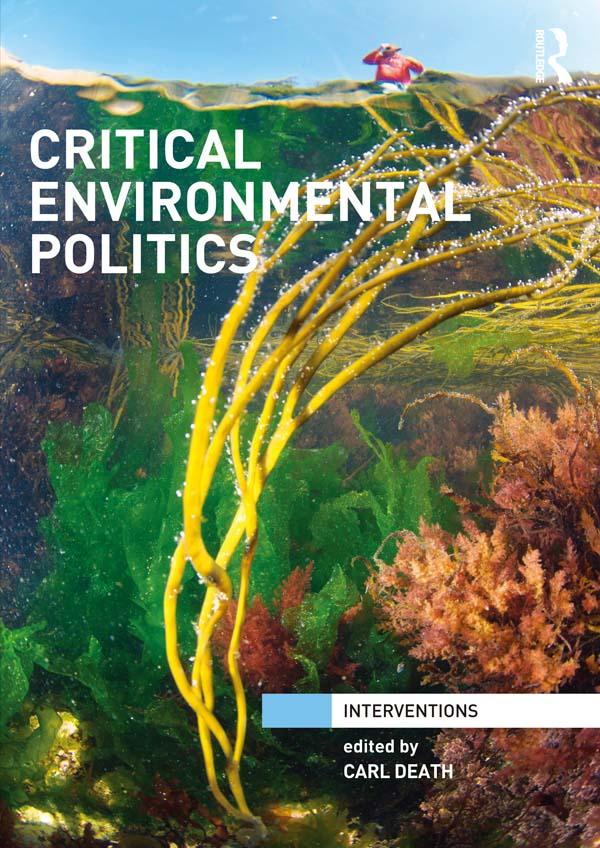
The aim of this book is to review central concepts in the study of environmental politics and to open up new questions, problems, and research agendas in the field.
The volume does so by drawing on a wide range of approaches from critical theory to poststructuralism, and spanning disciplines including international relations, geography, sociology, history, philosophy, anthropology, and political science. The 28 chapters cover a range of global and local studies, illustrations and cases. These range from the Cochabamba conference in Bolivia to climate camps in the UK; UN summits in Rio de Janeiro and Johannesburg to climate migrants from Pacific islands; forests in Indonesia to Dutch energy governance reform; indigenous communities in Namibia to oil extraction in the Niger Delta; survivalist militias in the USA to Maasai tribesmen in Kenya.
Rather than following a regional or issue-based (e.g. water, forests, pollution, etc) structure, the volume is organised in terms of key concepts in the field, including those which have been central to the social sciences for a long time (such as citizenship, commodification, consumption, feminism, justice, movements, science, security, the state, summits, and technology); those which have been at the heart of environmental politics for many years (including biodiversity, climate change, conservation, eco-centrism, limits, localism, resources, sacrifice, and sustainability); and many which have been introduced to these literatures and debates more recently (biopolitics, governance, governmentality, hybridity, posthumanism, risk, and vulnerability).
Features and benefits of the book:
- Explains the most important concepts and theories in environmental politics.
- Reviews the core ideas behind crucial debates in environmental politics.
- Highlights the key thinkers – both classic and contemporary – for studying environmental politics.
- Provides original perspectives on the critical potential of the concepts for future research agendas as well as for the practice of environmental politics.
Each chapter is written by leading international authors in their field.
This exciting new volume will be essential textbook reading for all students of environmental politics, as well as provocatively presenting the field in a different light for more established researchers.
Pay easily by card, Klarna, Apple Pay or Google Pay. Not happy? You always have a 14-day money-back guarantee. Read more in our terms. If you have any questions, email us at hello@memmo.org.
Memmo makes studying easier – wherever you are in the world. We bring your course books and smart study tools together in one place: summaries, quizzes, podcasts and flashcards. Plus Ted, your study buddy who answers anything you wonder. Over 50,000 students already study here – built to help you learn faster and stress less.