
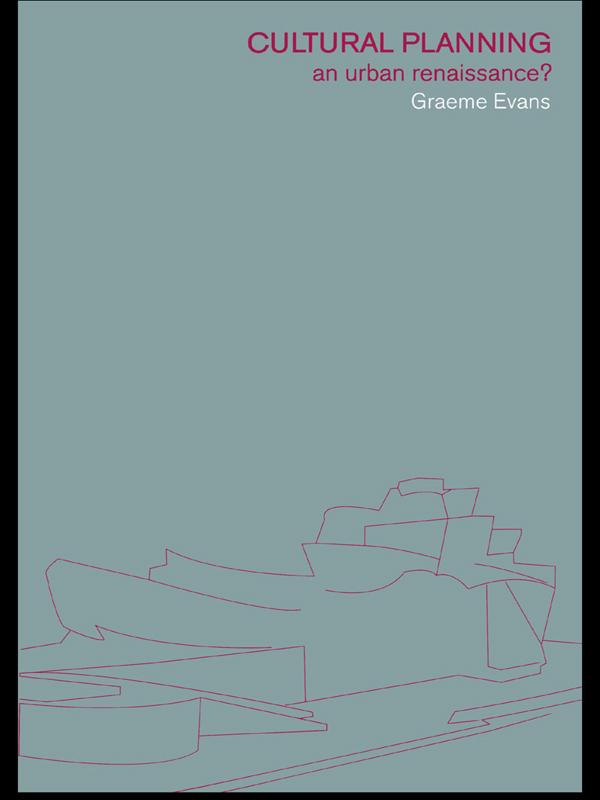
Using an historic and contemporary analysis, Cultural Planning examines how and why the cultures have been planned and the extent to which cultural amenities have been considered in town planning. From its ancient roots in the cities of classical Athenian, Roman and Byzantium empires, to the European Renaissance, public culture shows both an historic continuity and contemporary response to economic and social change. Whilst the arts are considered an extension of welfare provision and human rights, the creative industries and cultural tourism are also vital for economic growth and employment in the post-industrial age. However, the new 'Grand Projects', which look to the arts as an element of urban regeneration, tend to be at the cost of both local cultural amenities and a culturally diverse society.
Cultural Planning is the first book on the planning of the arts and culture and the interaction between the state arts policy, the cultural economy and town and city planning. It uses case studies and examples from Europe, North America and Asia.
The book calls for the adoption of consultative planning policy, distributive models and a more integrated approach to both culture and urban design, to prevent the reinforcement of existing geographical and cultural divides.
Pay easily by card, Klarna, Apple Pay or Google Pay. Not happy? You always have a 14-day money-back guarantee. Read more in our terms. If you have any questions, email us at hello@memmo.org.
Memmo makes studying easier – wherever you are in the world. We bring your course books and smart study tools together in one place: summaries, quizzes, podcasts and flashcards. Plus Ted, your study buddy who answers anything you wonder. Over 75,000 students already study here – built to help you learn faster and stress less.