
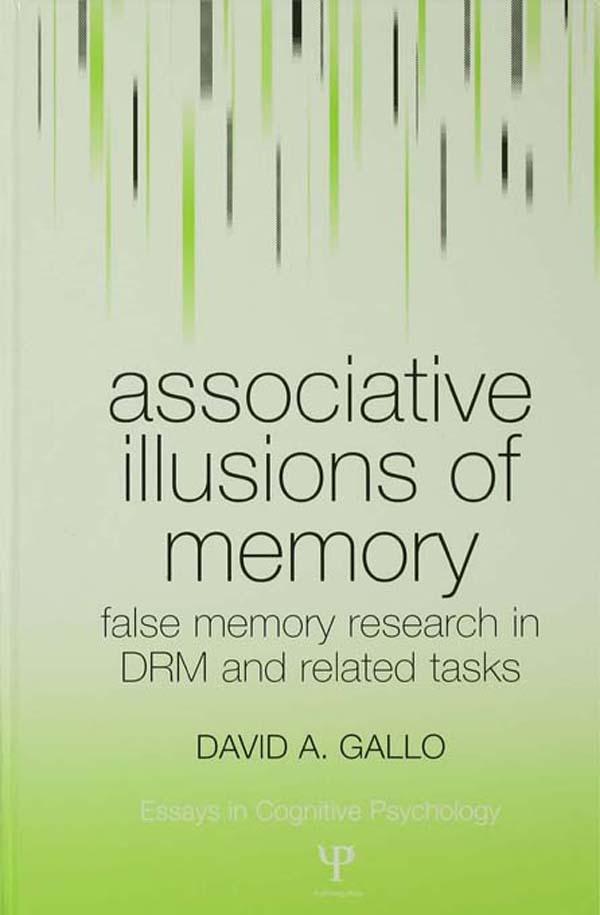
The last decade has seen a flurry of experimental research into the neurocognitive underpinnings of illusory memories. Using simple materials and tests (e.g., recalling words or pictures), methods such as the famed Deese-Roediger-McDermott (DRM) task have attracted considerable attention. These tasks elicit false memories of nonstudied events that are vivid, long lasting, and difficult to consciously avoid. Additional research shows that these memory illusions are fundamentally related to more complex memory distortions. As a result, this rapidly expanding literature has generated a great deal of excitement - and even some controversy - in contemporary psychology.
Associative Illusions of Memory provides an ambitious overview of this research area. Starting with the historical roots and major theoretical trends, this book exhaustively reviews the most recent studies by cognitive psychologists, neuropsychologists, and cognitive neuroscientists. The strengths and limits of various experimental techniques are outlined, and the large body of existing data is meaningfully distilled into a few core theoretical concepts.
This book highlights the malleability of memory, as well as the strategies and situations that can help us avoid false memories. Throughout the review, it is argued that these basic memory illusions contribute to a deeper understanding of how human memory works.
Pay easily by card, Klarna, Apple Pay or Google Pay. Not happy? You always have a 14-day money-back guarantee. Read more in our terms. If you have any questions, email us at hello@memmo.org.
Memmo makes studying easier – wherever you are in the world. We bring your course books and smart study tools together in one place: summaries, quizzes, podcasts and flashcards. Plus Ted, your study buddy who answers anything you wonder. Over 50,000 students already study here – built to help you learn faster and stress less.
You might also like
Buy the book0