
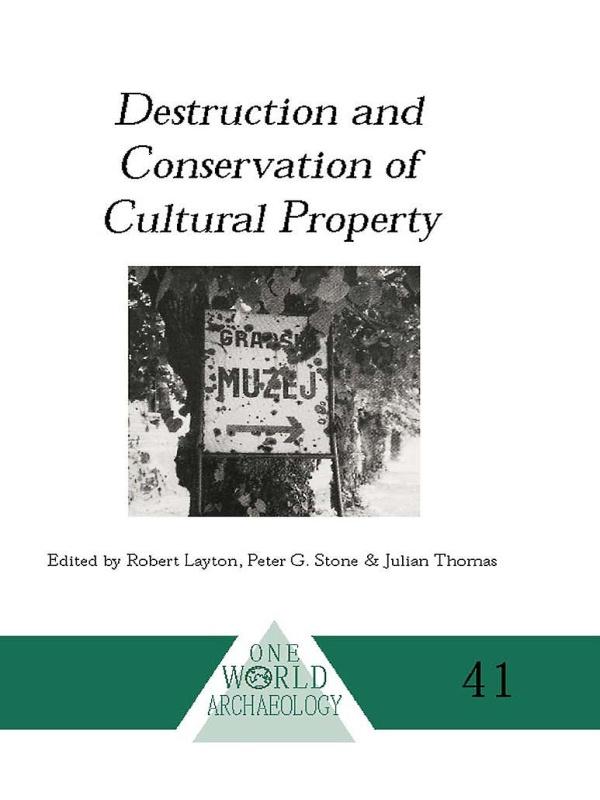
In 1991 the mosque at Ayodhya in India was demolished by Hindu fundamentalists who claim that it stood on the birthplace of a legendary Hindu hero. During recent conflicts in former Yugoslavia, ethnic groups destroyed mosques and churches to eliminate evidence of long-term settlement by other communities. Over successive centuries, however, a single building in Cordoba functioned as a mosque, a church and a synagogue. The Roman Emperor Diocletian's Palace in Split is occupied today by shops and residential apartments. What circumstances have lead to the survival and reinterpretation of some monuments, but the destruction of others?
This work asks whether the idea of world heritage is an essential mechanism for the protection of the world's cultural and natural heritage, or whether it subjugates a diversity of cultural traditions to specifically Western ideas. How far is it acceptable for one group of people to comment upon, or intercede in, the way in which another community treats the remains which it claims as its own? What are the responsibilities of multinational corporations and non-governmental organisations operating in the Developing World? Who actually owns the past: the landowner, indigenous people, the State or humankind?
Pay easily by card, Klarna, Apple Pay or Google Pay. Not happy? You always have a 14-day money-back guarantee. Read more in our terms. If you have any questions, email us at hello@memmo.org.
Memmo makes studying easier – wherever you are in the world. We bring your course books and smart study tools together in one place: summaries, quizzes, podcasts and flashcards. Plus Ted, your study buddy who answers anything you wonder. Over 75,000 students already study here – built to help you learn faster and stress less.
You might also like
Buy the book0