
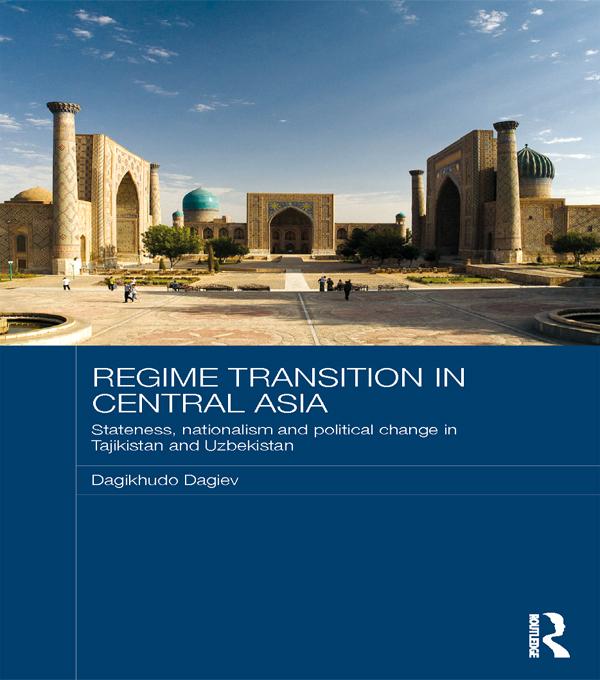
Presenting a study of regime transition, political transformation, and the challenges that faced the post-Communist republics of Central Asia on independence, this book focuses on the process of transition in Tajikistan and Uzbekistan, and the obstacles that these newly-independent states are facing in the post-Communist period.
The book analyses how in the early stages of their independence, the governments of Central Asia declared that they would build democratic states, but that in practice, they demonstrated that they are more inclined towards authoritarianism. With the declaration of independence, Tajikistan and Uzbekistan, like many other former Soviet national republics, were faced with the issues of nationalism, ethnicity, identity and territorial delimitation. This book looks at how the discourse of patrimonial nationalism in post-Communist Tajikistan and Uzbekistan has been the elites’ strategy to address all these issues: to maintain the stateness of their respective countries; to preserve the unity of their nation; to fill the ideological void of post-Communism; to prevent the rise of Islam; and to legitimize their authoritarian practice.
Arguing against the claim that the Central Asian states have undergone divergent paths of transition, the book discusses how they are in fact all authoritarian, although exhibiting different degrees of authoritarianism. This book provides a useful contribution to studies on Central Asian Politics and International Relations.
Pay easily by card, Klarna, Apple Pay or Google Pay. Not happy? You always have a 14-day money-back guarantee. Read more in our terms. If you have any questions, email us at hello@memmo.org.
Memmo makes studying easier – wherever you are in the world. We bring your course books and smart study tools together in one place: summaries, quizzes, podcasts and flashcards. Plus Ted, your study buddy who answers anything you wonder. Over 50,000 students already study here – built to help you learn faster and stress less.