
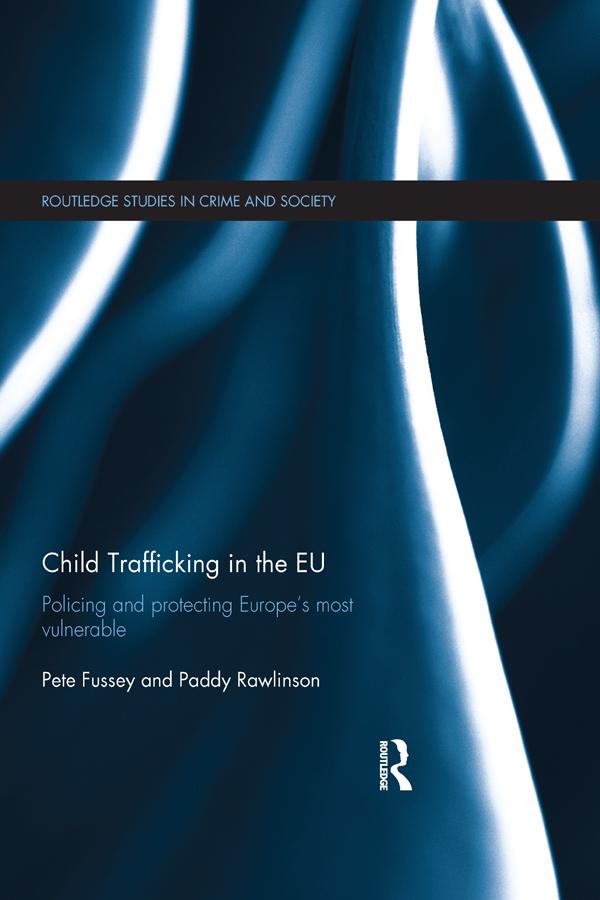
Drawing on empirical research conducted with police in the UK and Romania, Child Trafficking in the EU explores the way in which the ‘who’ and ‘how’ we police and protect as trafficker and trafficked is related to Western notions of innocence, guilt, childhood, and of the status of ‘deserving’ victim.
This book progresses a new theoretical space by linking its analysis to sociologies of mobility, marginalisation and the pluralised rendering of criminalised and victimised ‘others’. This book explores core contextual themes surrounding the commission, response to and origins of child trafficking, and presents empirical research into the investigation of child trafficking within the EU, situating the authors’ findings against broader social, cultural, political, policy and judicial contexts.
The authors conclude with a synthetisation of the key themes and arguments to situate pan-EU child trafficking within political, criminal justice, organisational, cultural, and social contexts, and consider the degree to which such criminality can be can adequately addressed by current and emerging approaches given such enduring and persistent structural issues. This book will be of interest to scholars and students within the fields of criminology, sociology, political science and law, as well as a key resource for practitioners and activists.
Pay easily by card, Klarna, Apple Pay or Google Pay. Not happy? You always have a 14-day money-back guarantee. Read more in our terms. If you have any questions, email us at hello@memmo.org.
Memmo makes studying easier – wherever you are in the world. We bring your course books and smart study tools together in one place: summaries, quizzes, podcasts and flashcards. Plus Ted, your study buddy who answers anything you wonder. Over 50,000 students already study here – built to help you learn faster and stress less.