
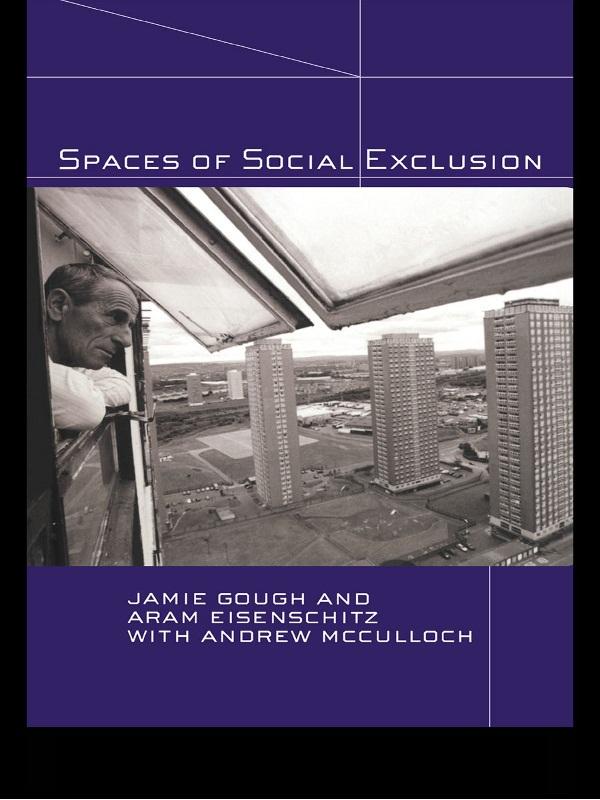
To varying extents in developed countries a minority of the population suffers from deprivation. Britain’s Labour government in particular has sought to deal with this through the notion of 'social exclusion', and similar ideas have been developed in other countries. This important text explores the various forms of this contemporary economic and social disadvantage and, in particular, investigates its social and spatial causes and the role of space in policies addressing disadvantage. Arranged in three distinct parts, it:
- introduces contemporary and historical conceptualizations of social exclusion and poverty
- analyzes social exclusion’s origins by examining the different spheres of disadvantage and their relations
- discusses strategies for overcoming social exclusion, and analyzes policy ideas from across the political spectrum.
This book is the first to systematically analyze the role of geography in poverty and social exclusion, and deals with the roles of ‘globalization’ and localism. Though its main focus is Britain, it investigates similarities and differences in other developed countries.
Spaces of Social Exclusion is a key text for researchers and students throughout the social sciences, social policy, human geography and urban studies, as well as policy makers and practitioners in social and urban policy.
Pay easily by card, Klarna, Apple Pay or Google Pay. Not happy? You always have a 14-day money-back guarantee. Read more in our terms. If you have any questions, email us at hello@memmo.org.
Memmo makes studying easier – wherever you are in the world. We bring your course books and smart study tools together in one place: summaries, quizzes, podcasts and flashcards. Plus Ted, your study buddy who answers anything you wonder. Over 50,000 students already study here – built to help you learn faster and stress less.