
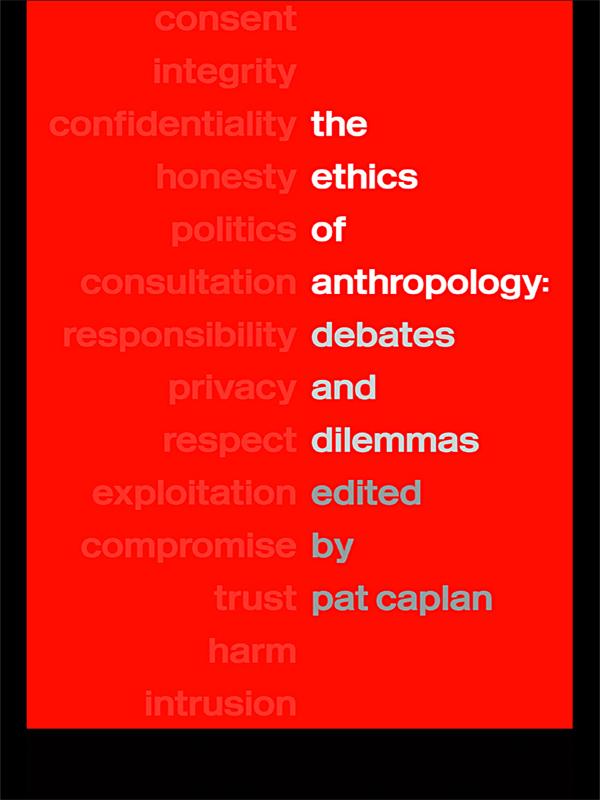
Since the inception of their discipline, anthropologists have studied virtually every conceivable aspect of other peoples' morality - religion, social control, sin, virtue, evil, duty, purity and pollution. But what of the examination of anthropology itself, and of its agendas, epistemes, theories and praxes? In 1991, Raymond Firth spoke of social anthropology as an essentially moral discipline. Is such a view outmoded in a postmodern era? Do anthropological ethics have to be re-thought each generation as the conditions of the discipline change, and as choices collide with moral alternatives? The Ethics of Anthropology looks at some of these crucial issues as they reflect on researcher relations, privacy, authority, secrecy and ownership of knowledge. The book combines theoretical papers and case studies from eminent scholars including Lisette Josephides, Steven Nugent, Marilyn Silverman, Andrew Spiegel and Veronica Strang. Showing how the topic of ethics goes to the heart of anthropology, it raises the controversial question of why - and for whom - the anthropological discipline functions.
Pay easily by card, Klarna, Apple Pay or Google Pay. Not happy? You always have a 14-day money-back guarantee. Read more in our terms. If you have any questions, email us at hello@memmo.org.
Memmo makes studying easier – wherever you are in the world. We bring your course books and smart study tools together in one place: summaries, quizzes, podcasts and flashcards. Plus Ted, your study buddy who answers anything you wonder. Over 50,000 students already study here – built to help you learn faster and stress less.