
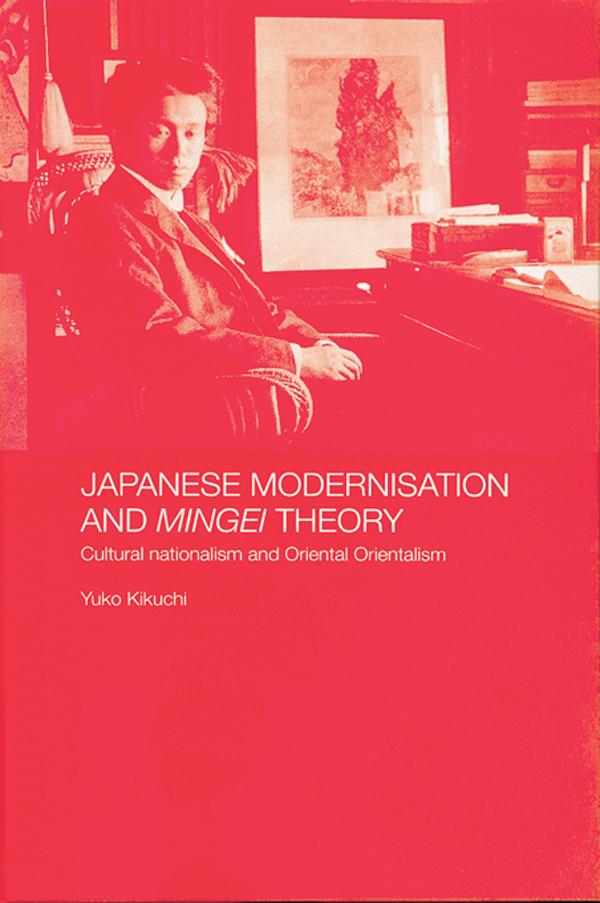
Conceptualised in 1920s Japan by Yanagi Sôetsu, the Mingei movement has spread world wide since the 1950s, creating phenomena as diverse as Mingei museums, Mingei connoisseurs and collectors, Mingei shops and Mingei restaurants. The theory, at its core and its adaptation by Bernard Leach, has long been an influential 'Oriental' aesthetic for studio craft artists in the West. But why did Mingei become so particularly influential to a western audience? And could the 'Orientalness' perceived in Mingei theory be nothing more than a myth? This richly illustrated work offers controversial new evidence through its cross-cultural examination of a wide range of materials in Japanese, English, Korean and Chinese, bringing about startling new conclusions concerning Japanese modernization and cultural authenticity. This new interpretation of the Mingei movement will appeal to scholars of Japanese art history as well as those with interests in cultural identity in non-Western cultures.
Pages: 328
Category: Konst, Design & Fotografi
e-ISBN: 9781134429554
Shipping weight: 1.2 kg
Ships in: 1-2 days
Pay easily by card, Klarna, Apple Pay or Google Pay. Not happy? You always have a 14-day money-back guarantee. Read more in our terms. If you have any questions, email us at hello@memmo.org.
Memmo makes studying easier – wherever you are in the world. We bring your course books and smart study tools together in one place: summaries, quizzes, podcasts and flashcards. Plus Ted, your study buddy who answers anything you wonder. Over 50,000 students already study here – built to help you learn faster and stress less.
You might also like
Buy the book0