
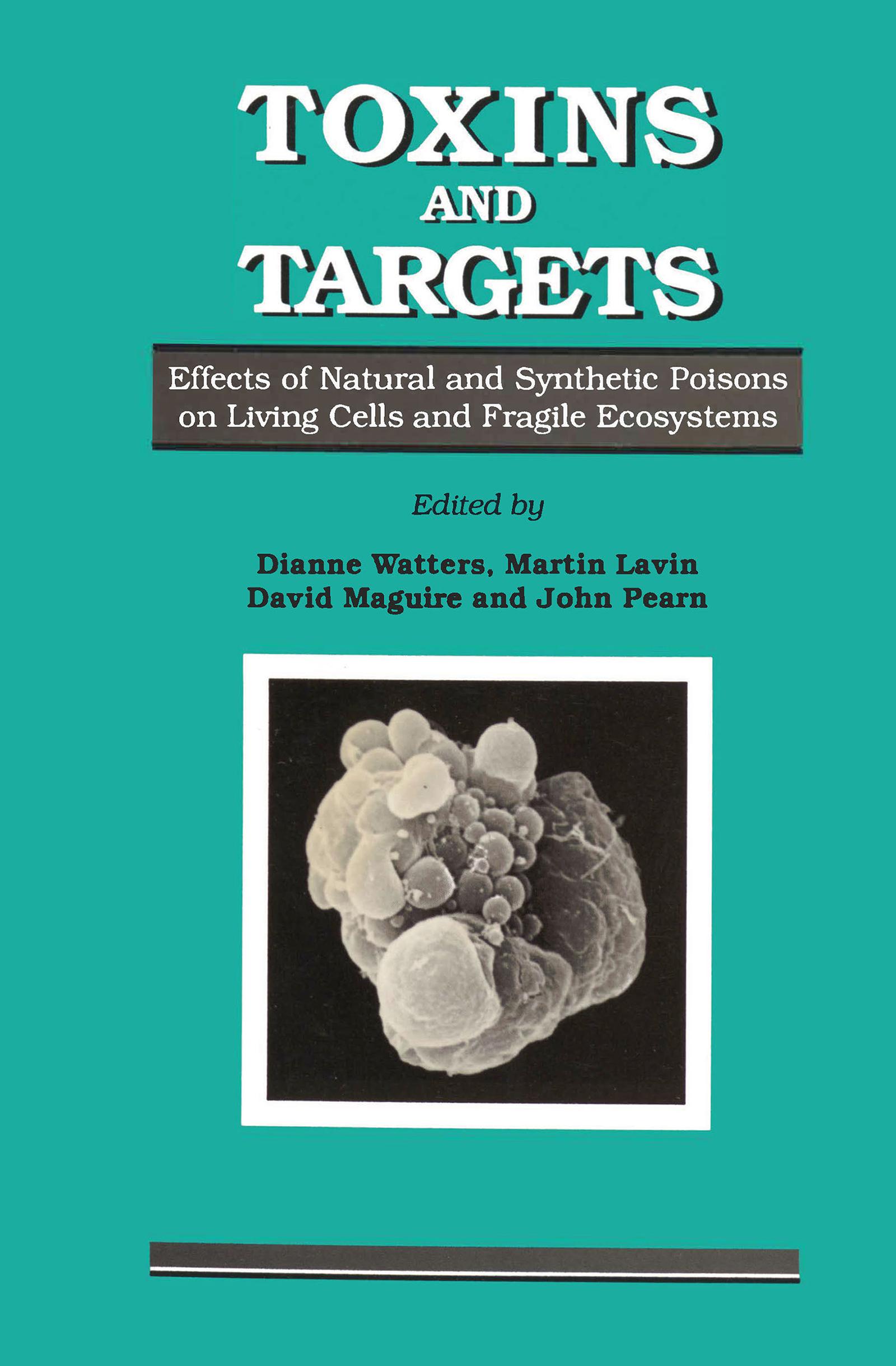
First Published in 1992. The last decade of the twentieth century has seen an unprecedented advocacy for the preservation of a safe environment, and the prevention of ill-health from toxic chemicals. Human activity, however, is responsible for introducing new toxins into the environment. In order to control competitors for human food sources, an armament of pesticides has been assembled and their widespread and largely uncontrolled application has been permitted. It is only when the health of the population begins to suffer from the effects of these chemicals that the efficacy of their use is questioned. Decision-makers whose roles involve the promotion and control of the environment must look to lessons that can be learnt from biosystems that include animals other than man.
Toxins and Targets details the way in which organisms from diverse habitats in the plant and animal kingdoms have adapted to handle toxins safely. Part I, on the aquatic environment, highlights the means by which marine organisms have adapted their toxins to be effective in a world of high aqueous solubility and infinite dilution. Part II deals with venomous terrestrial organisms and the mechanisms by which they damage animal cells, and Part III considers the way in which human society attempts to investigate toxicity and to control both synthetic and naturally occurring poisons. The development of a safe environment depends on increased knowledge and novel approaches to solving escalating problems. This book is a step towards this end.
Pay easily by card, Klarna, Apple Pay or Google Pay. Not happy? You always have a 14-day money-back guarantee. Read more in our terms. If you have any questions, email us at hello@memmo.org.
Memmo makes studying easier – wherever you are in the world. We bring your course books and smart study tools together in one place: summaries, quizzes, podcasts and flashcards. Plus Ted, your study buddy who answers anything you wonder. Over 50,000 students already study here – built to help you learn faster and stress less.