
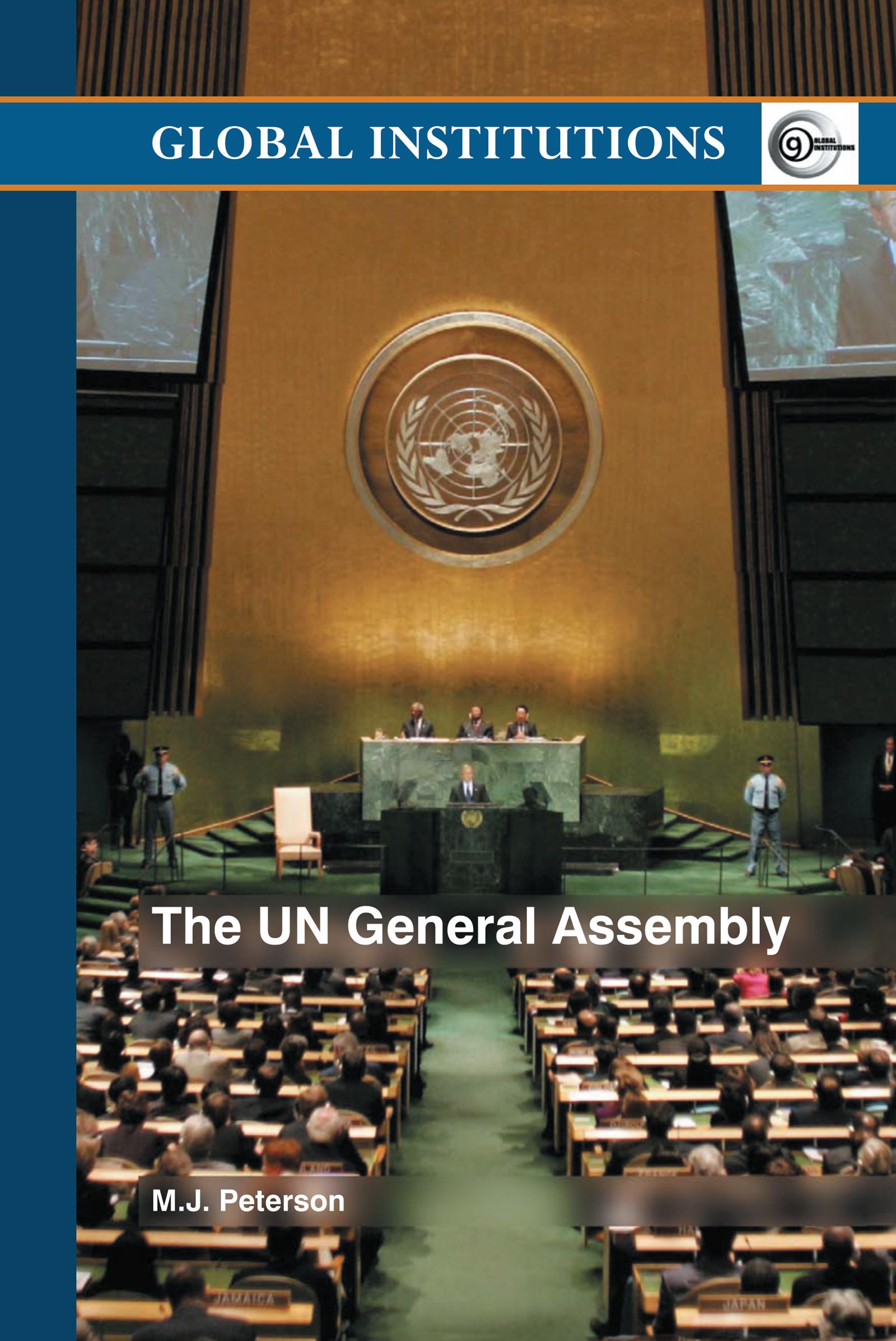
The United Nations General Assembly is arguably the most important discussion forum in global politics. This is a concise and accessible introduction to its history, organization and politics.
Examining the development of the Assembly as a forum for improving international cooperation, this study details its development of shared norms and goals in the political context of the immediate post-World War II era. The Assembly has had to adapt quickly to the Cold War, the South-North contentions over development, the dissolution of the Soviet bloc and the rise in concern about terrorism.
This study also presents a fascinating look ahead to three potential futures: a world of states, a world government, and a world of network governance. To flourish in any of these contexts it shows how the practices of the institution will require considerable change. The common criticisms of the Assembly are also covered in depth, such as that it is just a talking shop; that it is hamstrung by the Security Council and that it benefits the rich at the expense of the poor.
This is an ideal book for students of the United Nations, international organizations and global governance.
Pay easily by card, Klarna, Apple Pay or Google Pay. Not happy? You always have a 14-day money-back guarantee. Read more in our terms. If you have any questions, email us at hello@memmo.org.
Memmo makes studying easier – wherever you are in the world. We bring your course books and smart study tools together in one place: summaries, quizzes, podcasts and flashcards. Plus Ted, your study buddy who answers anything you wonder. Over 50,000 students already study here – built to help you learn faster and stress less.