
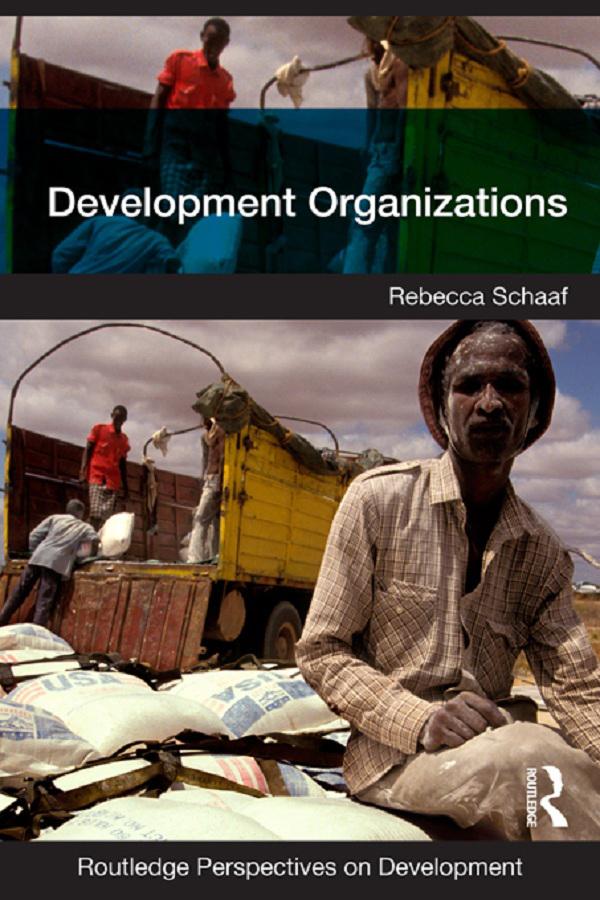
Continuing debates over the meaning of development and awareness of the persistence of poverty have resulted in increasing concern over how to ‘do’ development. There are growing numbers of development organizations, undertaking different activities, at different scales, with different motivations, and differing levels of success. It is necessary to identify and evaluate these varied organizations, in order to recognize their successes and failures.
Development Organizations is the first introductory text to focus specifically on the variety of organizations involved in development policy and practice. It explores the range and role of organizations, including community-based organizations and civil society actors, international non-governmental organizations, state and other national-based actors, global forms of governance, international financial institutions and transnational corporations. The historical and contemporary role of each of these actors is considered, with analysis of complex theoretical debates surrounding their existence and their activities. The book also explores the political and contested nature of development activities promoted by these organizations, and their effects on society, the economy and the environment. These issues are also considered in context of the Millennium Development Goals; the agenda which currently impacts on the operation and outcomes of the broad range of development organizations.
This invaluable text is richly complimented throughout with case studies to help illustrate the operations of development organizations; from the impact of multinational oil companies in the Niger delta to the impact of IMF reforms in Latin America and the Caribbean. This clearly written and user friendly text contains a wealth of features to assist student learning, including start of chapter learning outcomes, and end of chapter summaries, discussion topics, and suggestions for further reading and relevant websites.
Pay easily by card, Klarna, Apple Pay or Google Pay. Not happy? You always have a 14-day money-back guarantee. Read more in our terms. If you have any questions, email us at hello@memmo.org.
Memmo makes studying easier – wherever you are in the world. We bring your course books and smart study tools together in one place: summaries, quizzes, podcasts and flashcards. Plus Ted, your study buddy who answers anything you wonder. Over 50,000 students already study here – built to help you learn faster and stress less.