
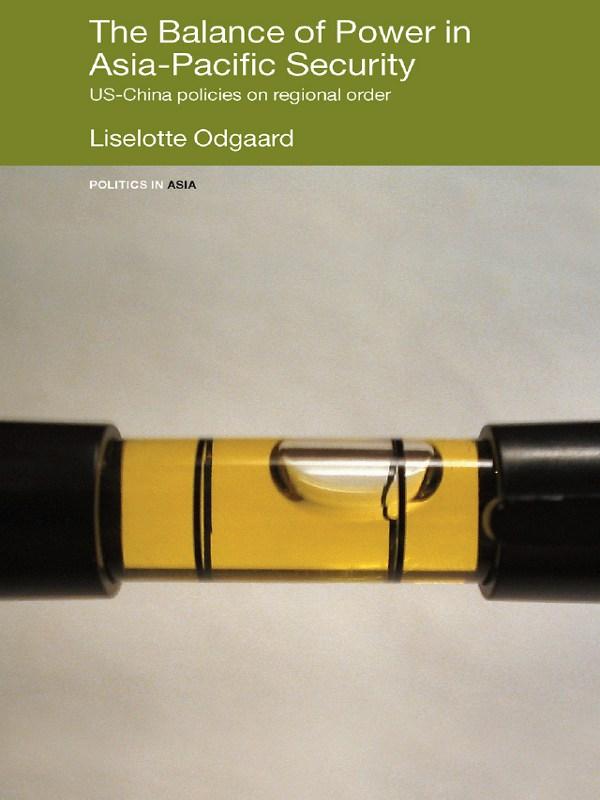
Investigating the dynamics of balancing patterns in the Asia-Pacific, this book focuses particularly on the contribution of great powers and middle powers to regional stability. Taking the US and China as great powers, and using ASEAN, Russia, Australia and South Korea as example of middle powers, the author addresses the following questions:
- Do middle powers influence balancing patterns in the Asia-Pacific?
- Are the United States and China balancing each other in the Asia-Pacific, and if so, by which means?
- What is the contribution of the English school to understanding balance of power dynamics?
The Balance of Power in Asia-Pacific Security makes a persuasive contribution to the debate on the US-China relationship. Interviews with policy practitioners and academics in the region offer a systematic analysis of the complexities of Asia-Pacific security.
Providing conceptual insights, this book gives a fresh understanding of the mechanisms necessary to maintain regional stability and explains the implications of US-China power balancing for global security. It will be an important resource for scholars and students of Asia-Pacific politics and security.
Pay easily by card, Klarna, Apple Pay or Google Pay. Not happy? You always have a 14-day money-back guarantee. Read more in our terms. If you have any questions, email us at hello@memmo.org.
Memmo makes studying easier – wherever you are in the world. We bring your course books and smart study tools together in one place: summaries, quizzes, podcasts and flashcards. Plus Ted, your study buddy who answers anything you wonder. Over 50,000 students already study here – built to help you learn faster and stress less.