
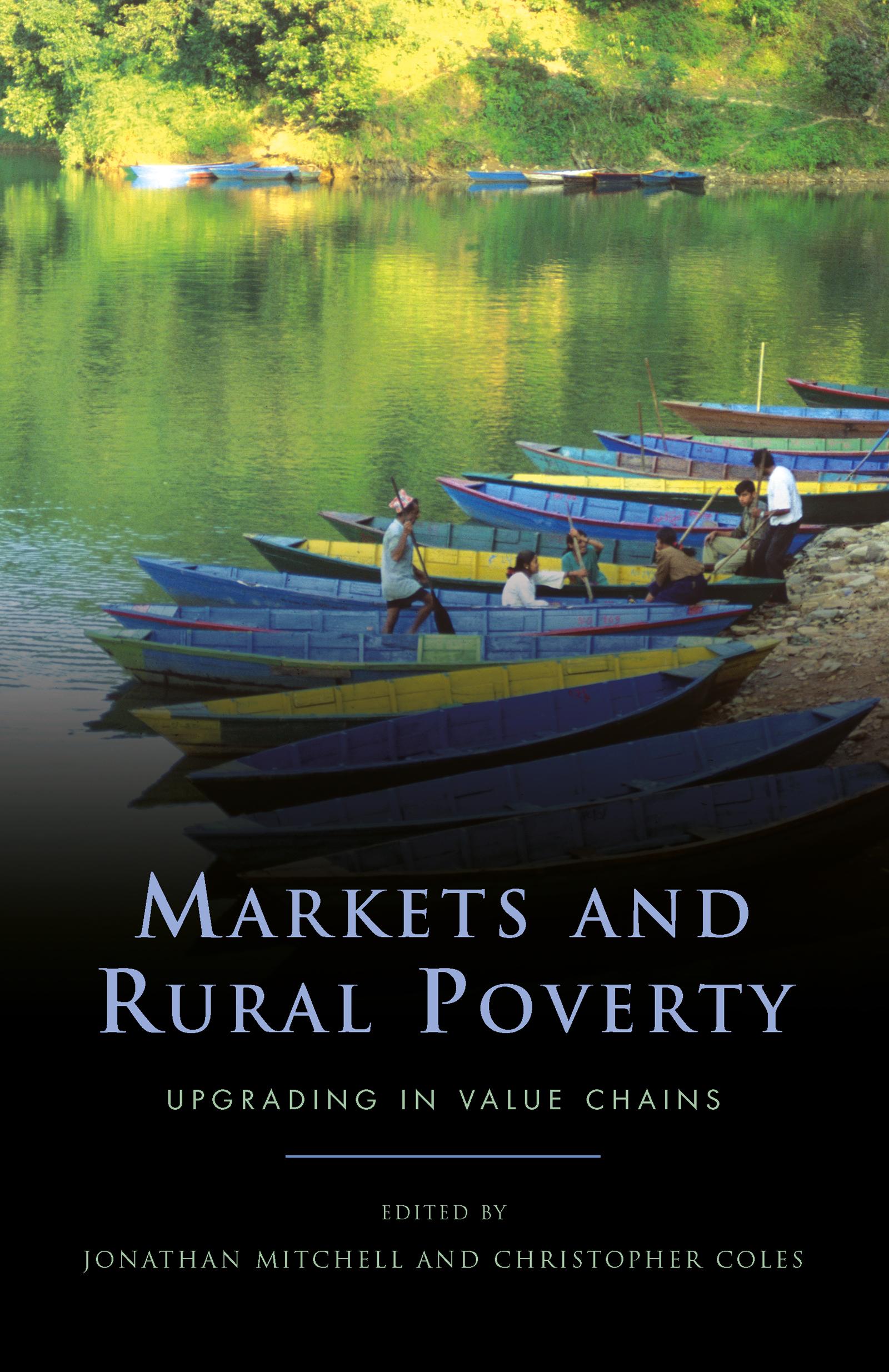
This book explores the place of poor people within a rich variety of value chains, focusing upon lagging, rural regions in Africa and Asia, and how they can 'upgrade' within such chains. Upgrading is a key concept for value chain analysis and refers to the acquisition of technological capabilities and market linkages that enable firms to improve their competitiveness and move into higher-value activities.
The authors examine a range of evidence to assess whether the 'bottom billion' people, living mainly in the rural areas of low-income countries, can improve their position through productive strategies and, if so, how? They propose an innovative conceptual framework of value chain upgrading for some of the most marginal producers in the poorest local economies. They demonstrate how interventions can improve poverty and the environment for poor people supplying a wide range of services and agricultural and food products to local, regional and global markets.
This analysis is based on empirical research conducted in Senegal, Mali, Tanzania, India, Nepal, Philippines and Vietnam. The main focus is on poverty, environment and gender outcomes of upgrading interventions, and represents one of the key challenges of contemporary development economics.
Pay easily by card, Klarna, Apple Pay or Google Pay. Not happy? You always have a 14-day money-back guarantee. Read more in our terms. If you have any questions, email us at hello@memmo.org.
Memmo makes studying easier – wherever you are in the world. We bring your course books and smart study tools together in one place: summaries, quizzes, podcasts and flashcards. Plus Ted, your study buddy who answers anything you wonder. Over 50,000 students already study here – built to help you learn faster and stress less.