
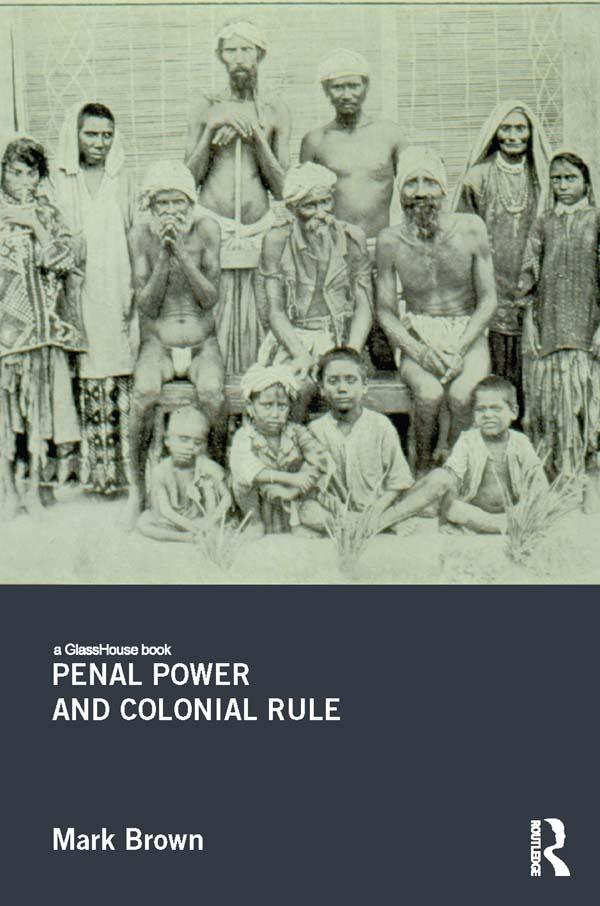
This book provides an account of the distinctive way in which penal power developed outside the metropolitan centre. Proposing a radical revision of the Foucauldian thesis that criminological knowledge emerged in the service of a new form of power – discipline – that had inserted itself into the very centre of punishment, it argues that Foucault’s alignment of sovereign, disciplinary and governmental power will need to be reread and rebalanced to account for its operation in the colonial sphere. In particular it proposes that colonial penal power in India is best understood as a central element of a liberal colonial governmentality.
To give an account of the emergence of this colonial form of penal power that was distinct from its metropolitan counterpart, this book analyses the British experience in India from the 1820s to the early 1920s. It provides a genealogy of both civil and military spheres of government, illustrating how knowledge of marginal and criminal social orders was tied in crucial ways to the demands of a colonial rule that was neither monolithic nor necessarily coherent. The analysis charts the emergence of a liberal colonial governmentality where power was almost exclusively framed in terms of sovereignty and security and where disciplinary strategies were given only limited and equivocal attention.
Drawing on post-colonial theory, Penal Power and Colonial Rule opens up a new and unduly neglected area of research. An insightful and original exploration of theory and history, this book will appeal to students and scholars of Law, Criminology, History and Post-colonial Studies.
Pay easily by card, Klarna, Apple Pay or Google Pay. Not happy? You always have a 14-day money-back guarantee. Read more in our terms. If you have any questions, email us at hello@memmo.org.
Memmo makes studying easier – wherever you are in the world. We bring your course books and smart study tools together in one place: summaries, quizzes, podcasts and flashcards. Plus Ted, your study buddy who answers anything you wonder. Over 50,000 students already study here – built to help you learn faster and stress less.