
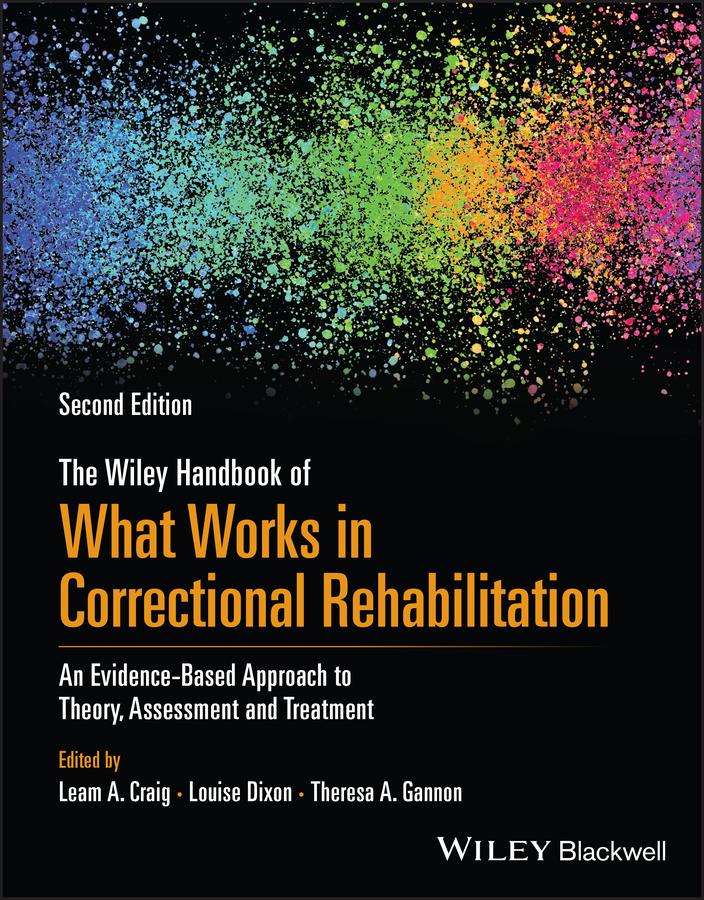
Theory, assessment, and treatment strategies for offenders across forensic populations, with practical examples and discussion of often overlooked cultural considerations
The Wiley Handbook of What Works in the Rehabilitation of People Who Have Offended comprehensively outlines effective rehabilitation strategies for offenders while acknowledging the challenges in implementation and discussing ethical considerations, potential biases, and the need for ongoing evaluation. The book introduces the current state of effective practices, outlines up-to-date risk assessment processes for various crime types, investigates effective treatments for diverse forensic populations, explores treatments for those in prison and mental health settings, and examines the often-overlooked cultural factors influencing rehabilitation efforts.
This Second Edition, expanded from 25 to 32 chapters, has been written by leading researchers, seasoned professionals, and academics, providing a wealth of expertise and diverse perspectives. Each chapter offers a well-researched and balanced review of existing literature, laying a solid foundation for comprehending the effectiveness of various rehabilitation approaches. Practical examples enhance the content's applicability, emphasizing evidence-based practices crucial for accountability and effectiveness in the criminal justice system.
Some of the sample topics discussed in The Wiley Handbook of What Works in the Rehabilitation of People Who Have Offended include:
- Risk, Need, and Responsivity principles used in the assessment and triage of offenders and evidence for the Good Lives Model in supporting rehabilitation and desistance from offending
- Recidivism risk in people convicted of intimate partner violence and treatment of aggressive and problematic adjudicated youth in a secure psychiatric setting
- Treatment of persons convicted of sexual offenses in the community, including online offending
- Strategies to prevent and reduce gang involvement and rehabilitation of intellectually disabled individuals who have harmful sexual behavior
Offering a valuable evidence-based coverage in the pursuit of effective rehabilitation strategies, the Second Edition of The Wiley Handbook of What Works in the Rehabilitation of People Who Have Offended is an indispensable resource for anyone involved in the criminal justice system, including professionals, policymakers, researchers, and students.
Pay easily by card, Klarna, Apple Pay or Google Pay. Not happy? You always have a 14-day money-back guarantee. Read more in our terms. If you have any questions, email us at hello@memmo.org.
Memmo makes studying easier – wherever you are in the world. We bring your course books and smart study tools together in one place: summaries, quizzes, podcasts and flashcards. Plus Ted, your study buddy who answers anything you wonder. Over 50,000 students already study here – built to help you learn faster and stress less.