
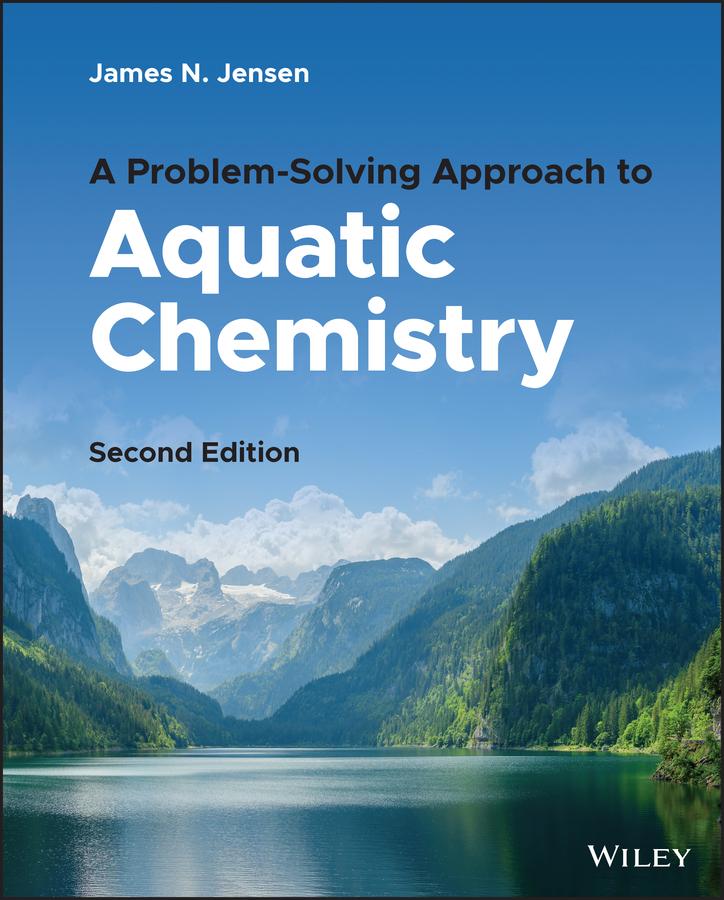
Enables civil and environmental engineers to understand the theory and application of aquatic equilibrium chemistry
The second edition of A Problem-Solving Approach to Aquatic Chemistry provides a detailed introduction to aquatic equilibrium chemistry, calculation methods for systems at equilibrium, applications of aquatic chemistry, and chemical kinetics. The text directly addresses two required ABET program outcomes in environmental engineering: “… chemistry (including stoichiometry, equilibrium, and kinetics)” and “material and energy balances, fate and transport of substances in and between air, water, and soil phases.”
The book is very student-centered, with each chapter beginning with an introduction and ending with a summary that reviews the chapter’s main points. To aid in reader comprehension, important terms are defined in context and key ideas are summarized. Many thought-provoking discussion questions, worked examples, and end of chapter problems are also included. Each part of the text begins with a case study, a portion of which is addressed in each subsequent chapter, illustrating the principles of that chapter. In addition, each chapter has an Historical Note exploring connections with the people and cultures connected to topics in the text.
A Problem-Solving Approach to Aquatic Chemistry includes:
- Fundamental concepts, such as concentration units, thermodynamic basis of equilibrium, and manipulating equilibria
- Solutions of chemical equilibrium problems, including setting up the problems and algebraic, graphical, and computer solution techniques
- Acid–base equilibria, including the concepts of acids and bases, titrations, and alkalinity and acidity
- Complexation, including metals, ligands, equilibrium calculations with complexes, and applications of complexation chemistry
- Oxidation-reduction equilibria, including equilibrium calculations, graphical approaches, and applications
- Gas–liquid and solid–liquid equilibrium, with expanded coverage of the effects of global climate change
- Other topics, including chemical kinetics of aquatic systems, surface chemistry, and integrative case studies
For advanced/senior undergraduates and first-year graduate students in environmental engineering courses, A Problem-Solving Approach to Aquatic Chemistry serves as an invaluable learning resource on the topic, with a variety of helpful learning elements included throughout to ensure information retention and the ability to apply covered concepts in practical settings.
Pay easily by card, Klarna, Apple Pay or Google Pay. Not happy? You always have a 14-day money-back guarantee. Read more in our terms. If you have any questions, email us at hello@memmo.org.
Memmo makes studying easier – wherever you are in the world. We bring your course books and smart study tools together in one place: summaries, quizzes, podcasts and flashcards. Plus Ted, your study buddy who answers anything you wonder. Over 50,000 students already study here – built to help you learn faster and stress less.