
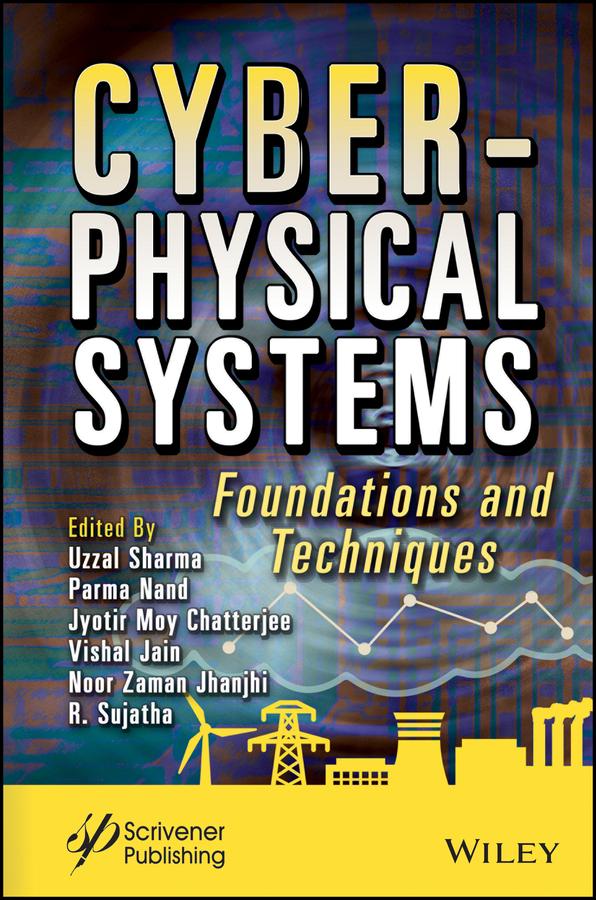
The 13 chapters in this book cover the various aspects associated with Cyber-Physical Systems (CPS) such as algorithms, application areas, and the improvement of existing technology such as machine learning, big data and robotics.
Cyber-Physical Systems (CPS) is the interconnection of the virtual or cyber and the physical system. It is realized by combining three well-known technologies, namely “Embedded Systems,” “Sensors and Actuators,” and “Network and Communication Systems.” These technologies combine to form a system known as CPS. In CPS, the physical process and information processing are so tightly connected that it is hard to distinguish the individual contribution of each process from the output. Some exciting innovations such as autonomous cars, quadcopter, spaceships, sophisticated medical devices fall under CPS.
The scope of CPS is tremendous. In CPS, one sees the applications of various emerging technologies such as artificial intelligence (AI), Internet of Things (IoT), machine learning (ML), deep learning (DL), big data (BD), robotics, quantum technology, etc. In almost all sectors, whether it is education, health, human resource development, skill improvement, startup strategy, etc., one sees an enhancement in the quality of output because of the emergence of CPS into the field.
Audience
Researchers in Information technology, artificial intelligence, robotics, electronics and electrical engineering.
Pay easily by card, Klarna, Apple Pay or Google Pay. Not happy? You always have a 14-day money-back guarantee. Read more in our terms. If you have any questions, email us at hello@memmo.org.
Memmo makes studying easier – wherever you are in the world. We bring your course books and smart study tools together in one place: summaries, quizzes, podcasts and flashcards. Plus Ted, your study buddy who answers anything you wonder. Over 50,000 students already study here – built to help you learn faster and stress less.