
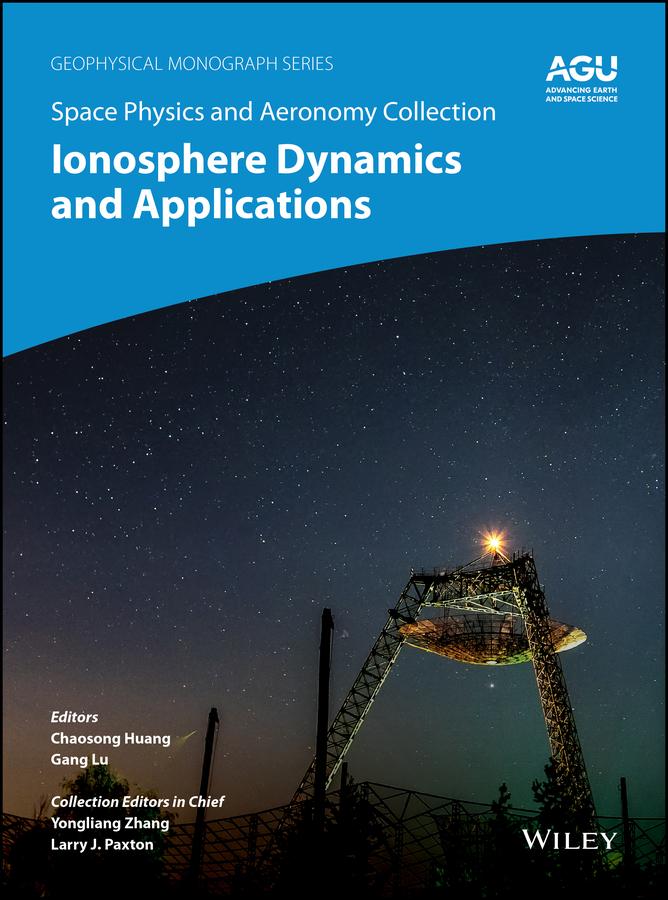
A comprehensive review of global ionospheric research from the polar caps to equatorial regions
It's more than a century since scientists first identified the ionosphere, the layer of the Earth’s upper atmosphere that is ionized by solar and cosmic radiation. Our understanding of this dynamic part of the near-Earth space environment has greatly advanced in recent years thanks to new observational technologies, improved numerical models, and powerful computing capabilities.
Ionosphere Dynamics and Applications provides a comprehensive overview of historic developments, recent advances, and future directions in ionospheric research.
Volume highlights include:
- Behavior of the ionosphere in different regions from the poles to the equator
- Distinct characteristics of the high-, mid-, and low-latitude ionosphere
- Observational results from ground- and space-based instruments
- Ionospheric impacts on radio signals and satellite operations
- How earthquakes and tsunamis on Earth cause disturbances in the ionosphere
The American Geophysical Union promotes discovery in Earth and space science for the benefit of humanity. Its publications disseminate scientific knowledge and provide resources for researchers, students, and professionals.
Find out more about the Space Physics and Aeronomy collection in this Q&A with the Editors in Chief
Pay easily by card, Klarna, Apple Pay or Google Pay. Not happy? You always have a 14-day money-back guarantee. Read more in our terms. If you have any questions, email us at hello@memmo.org.
Memmo makes studying easier – wherever you are in the world. We bring your course books and smart study tools together in one place: summaries, quizzes, podcasts and flashcards. Plus Ted, your study buddy who answers anything you wonder. Over 50,000 students already study here – built to help you learn faster and stress less.