
Despite popular belief to the contrary, entrepreneurship in the United States is dying. It has been since before the Great Recession of 2008, and the negative trend in American entrepreneurship has been accelerated by the Covid pandemic. New firms are being started at a slower rate, are employing fewer workers, and are being formed disproportionately in just a few major cities in the U.S. At the same time, large chains are opening more locations. Companies such as Amazon with their "deliver everything and anything" are rapidly displacing Main Street businesses.
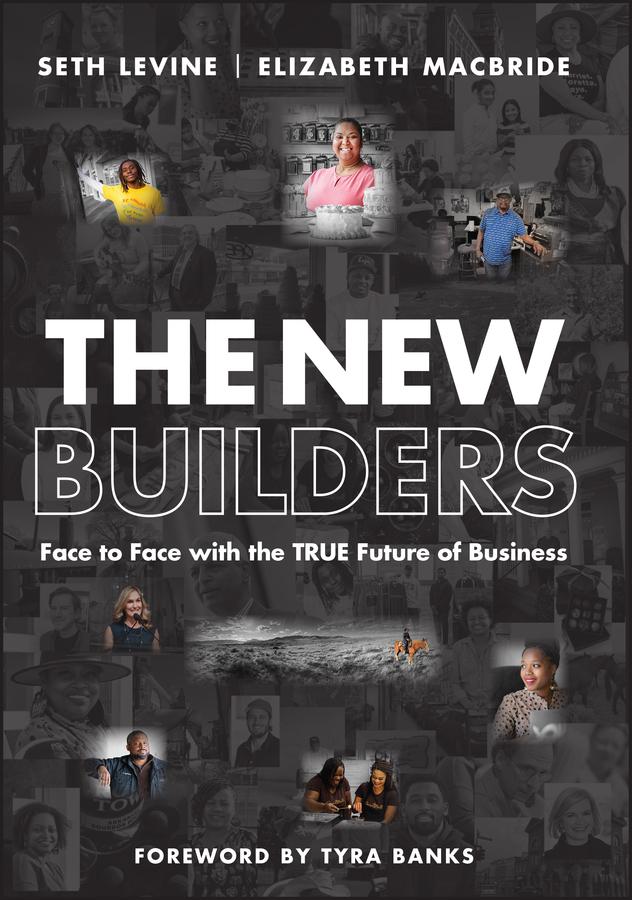
In The New Builders, we tell the stories of the next generation of entrepreneurs -- and argue for the future of American entrepreneurship. That future lies in surprising places -- and will in particular rely on the success of women, black and brown entrepreneurs. Our country hasn't yet even recognized the identities of the New Builders, let alone developed strategies to support them.
Our misunderstanding is driven by a core misperception. Consider a "typical" American entrepreneur. Think about the entrepreneur who appears on TV, the business leader making headlines during the pandemic. Think of the type of businesses she or he is building, the college or business school they attended, the place they grew up.
The image you probably conjured is that of a young, white male starting a technology business. He's likely in Silicon Valley. Possibly New York or Boston. He's self-confident, versed in the ins and outs of business funding and has an extensive (Ivy League?) network of peers and mentors eager to help his business thrive, grow and make millions, if not billions.
You’d think entrepreneurship is thriving, and helping the United States maintain its economic power.
You'd be almost completely wrong.
The dominant image of an entrepreneur as a young white man starting a tech business on the coasts isn't correct at all. Today's American entrepreneurs, the people who drive critical parts of our economy, are more likely to be female and non-white. In fact, the number of women-owned businesses has increased 31 times between 1972 and 2018 according to the Kauffman Foundation (in 1972, women-owned businesses accounted for just 4.6% of all firms; in 2018 that figure was 40%). The fastest-growing group of female entrepreneurs are women of color, who are responsible for 64% of new women-owned businesses being created.
In a few years, we believe women will make up more than half of the entrepreneurs in America.
The age of the average American entrepreneur also belies conventional wisdom: It's 42. The average age of the most successful entrepreneurs -- those in the top .01% in terms of their company's growth in the first five years -- is 45.
These are the New Builders. Women, people of color, immigrants and people over 40.
We're failing them. And by doing so, we are failing ourselves.
In this book, you'll learn:
- How the definition of business success in America today has grown corporate and around the concepts of growth, size, and consumption.
- Why and how our collective understanding of "entrepreneurship" has dangerously narrowed. Once a broad term including people starting businesses of all types, entrepreneurship has come to describe only the brash technology founders on the way to becoming big.
- Who are the fastest growing groups of entrepreneurs? What are they working on? What drives them?
- The real engine that drove Silicon Valley’s entrepreneurs. The government had a much bigger role than is widely known
- The extent to which entrepreneurs and small businesses are woven through our history, and the ways we have forgotten women and people of color who owned small businesses in the past.
- How we're increasingly afraid to fail
- The role small businesses are playing saving the wilderness, small towns and redlined communities
What we can do to turn the decline in entrepreneurship around, especially be supporting the people who are courageously starting small companies today.
Pay easily by card, Klarna, Apple Pay or Google Pay. Not happy? You always have a 14-day money-back guarantee. Read more in our terms. If you have any questions, email us at hello@memmo.org.
Memmo makes studying easier – wherever you are in the world. We bring your course books and smart study tools together in one place: summaries, quizzes, podcasts and flashcards. Plus Ted, your study buddy who answers anything you wonder. Over 50,000 students already study here – built to help you learn faster and stress less.