
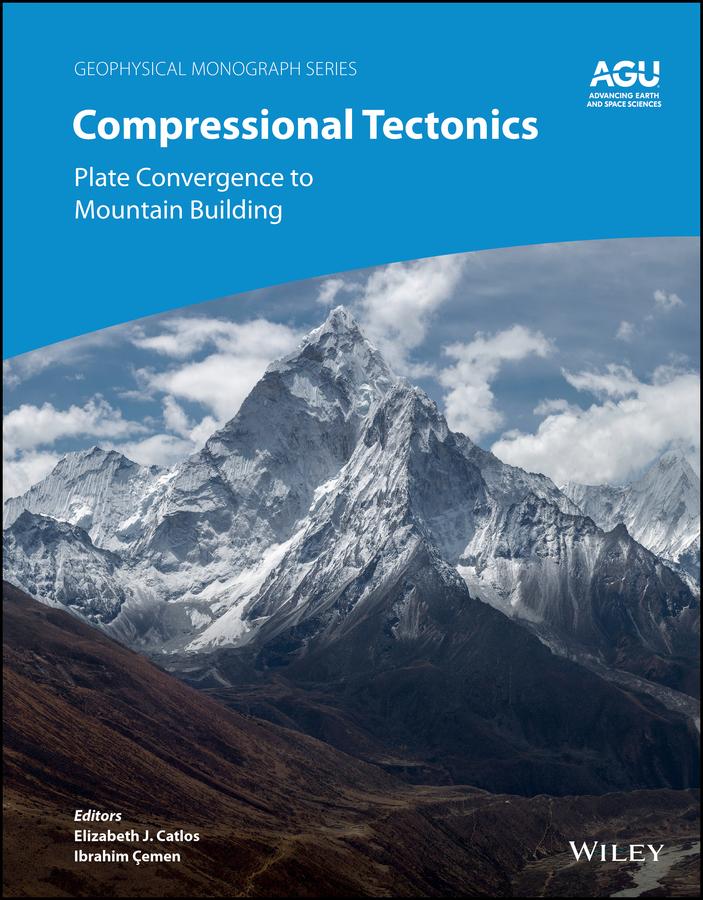
A synthesis of current knowledge on collisional and convergent plate boundaries worldwide
Major mountain belts on Earth, such as the Alps, Himalayas, and Appalachians, have been built by compressional tectonic processes during continent-continent and arc-continent collisions. Understanding their formation and evolution is important because of the hazards associated with convergent and collisional plate boundaries, and because these mountain belts contain resources such as precious metals, rare earth elements, oil, gas, and coal.
Compressional Tectonics: Plate Convergence to Mountain Building reviews our present-day knowledge of the tectonic evolution of the Alpine-Himalayan and Appalachian belts.
Volume highlights include:
- Overview of terminology relating to compressional and contractional tectonics
- Discussion of subduction zone dynamics
- Debates over the timing of the collision and convergence of particular subduction and suture zones
- Examples of the different stages in the development of orogenic belts
This book is one of a set of three in the collection Tectonic Processes: A Global View. Browse the second volume, Extensional Tectonics: Rifting and Continental Extension.
The American Geophysical Union promotes discovery in Earth and space science for the benefit of humanity. Its publications disseminate scientific knowledge and provide resources for researchers, students, and professionals.
Pay easily by card, Klarna, Apple Pay or Google Pay. Not happy? You always have a 14-day money-back guarantee. Read more in our terms. If you have any questions, email us at hello@memmo.org.
Memmo makes studying easier – wherever you are in the world. We bring your course books and smart study tools together in one place: summaries, quizzes, podcasts and flashcards. Plus Ted, your study buddy who answers anything you wonder. Over 50,000 students already study here – built to help you learn faster and stress less.