
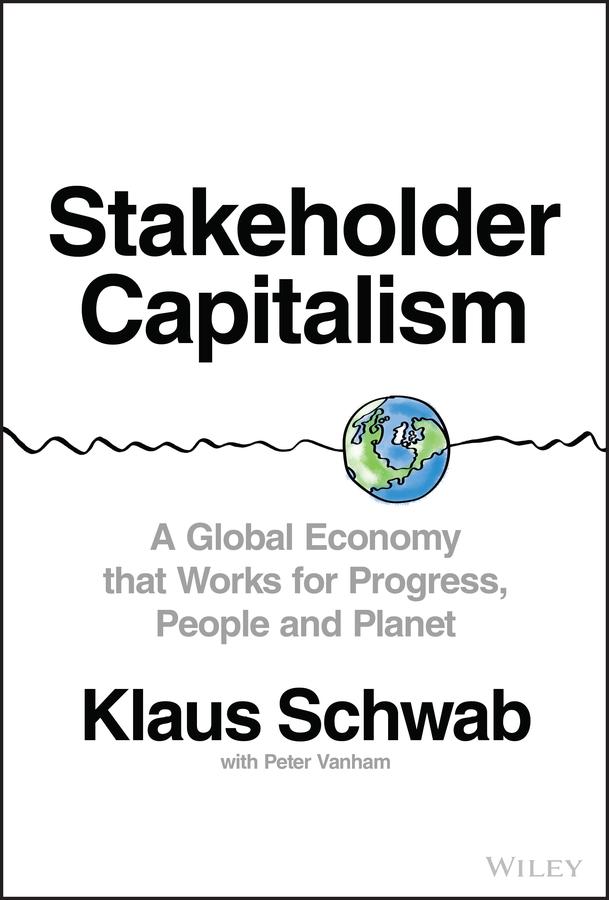
Reimagining our global economy so it becomes more sustainable and prosperous for all
Our global economic system is broken. But we can replace the current picture of global upheaval, unsustainability, and uncertainty with one of an economy that works for all people, and the planet. First, we must eliminate rising income inequality within societies where productivity and wage growth has slowed. Second, we must reduce the dampening effect of monopoly market power wielded by large corporations on innovation and productivity gains. And finally, the short-sighted exploitation of natural resources that is corroding the environment and affecting the lives of many for the worse must end.
The debate over the causes of the broken economy—laissez-faire government, poorly managed globalization, the rise of technology in favor of the few, or yet another reason—is wide open. Stakeholder Capitalism: A Global Economy that Works for Progress, People and Planet argues convincingly that if we don't start with recognizing the true shape of our problems, our current system will continue to fail us. To help us see our challenges more clearly, Schwab—the Founder and Executive Chairman of the World Economic Forum—looks for the real causes of our system's shortcomings, and for solutions in best practices from around the world in places as diverse as China, Denmark, Ethiopia, Germany, Indonesia, New Zealand, and Singapore. And in doing so, Schwab finds emerging examples of new ways of doing things that provide grounds for hope, including:
- Individual agency: how countries and policies can make a difference against large external forces
- A clearly defined social contract: agreement on shared values and goals allows government, business, and individuals to produce the most optimal outcomes
- Planning for future generations: short-sighted presentism harms our shared future, and that of those yet to be born
- Better measures of economic success: move beyond a myopic focus on GDP to more complete, human-scaled measures of societal flourishing
By accurately describing our real situation, Stakeholder Capitalism is able to pinpoint achievable ways to deal with our problems. Chapter by chapter, Professor Schwab shows us that there are ways for everyone at all levels of society to reshape the broken pieces of the global economy and—country by country, company by company, and citizen by citizen—glue them back together in a way that benefits us all.
Pay easily by card, Klarna, Apple Pay or Google Pay. Not happy? You always have a 14-day money-back guarantee. Read more in our terms. If you have any questions, email us at hello@memmo.org.
Memmo makes studying easier – wherever you are in the world. We bring your course books and smart study tools together in one place: summaries, quizzes, podcasts and flashcards. Plus Ted, your study buddy who answers anything you wonder. Over 50,000 students already study here – built to help you learn faster and stress less.