
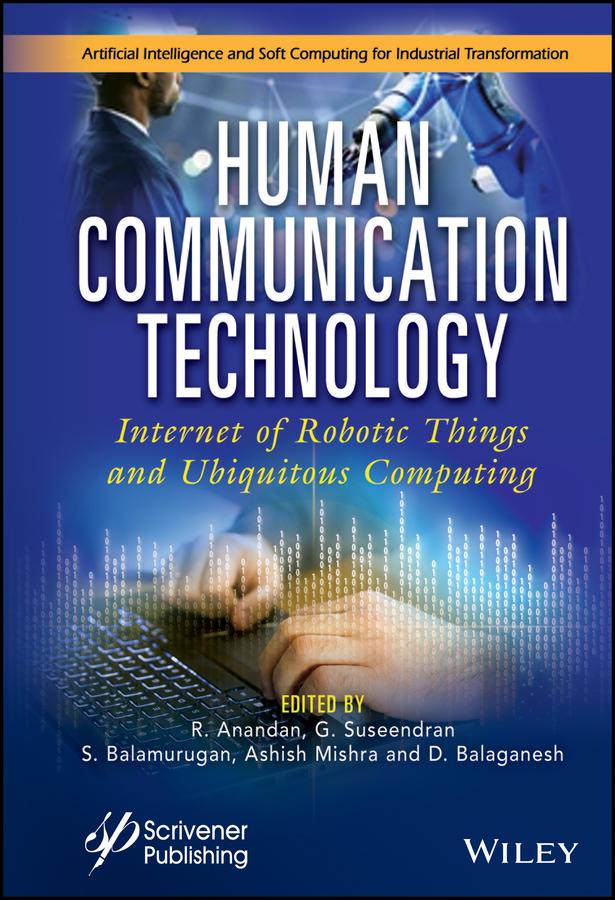
A unique book explaining how perception, location, communication, cognition, computation, networking, propulsion, integration of federated Internet of Robotic Things (IoRT) and digital platforms are important components of new-generation IoRT applications through continuous, real-time interaction with the world.
The 16 chapters in this book discuss new architectures, networking paradigms, trustworthy structures, and platforms for the integration of applications across various business and industrial domains that are needed for the emergence of intelligent things (static or mobile) in collaborative autonomous fleets. These new apps speed up the progress of paradigms of autonomous system design and the proliferation of the Internet of Robotic Things (IoRT). Collaborative robotic things can communicate with other things in the IoRT, learn independently, interact securely with the world, people, and other things, and acquire characteristics that make them self-maintaining, self-aware, self-healing, and fail-safe operational. Due to the ubiquitous nature of collaborative robotic things, the IoRT, which binds together the sensors and the objects of robotic things, is gaining popularity. Therefore, the information contained in this book will provide readers with a better understanding of this interdisciplinary field.
Audience
Researchers in various fields including computer science, IoT, artificial intelligence, machine learning, and big data analytics.
Pay easily by card, Klarna, Apple Pay or Google Pay. Not happy? You always have a 14-day money-back guarantee. Read more in our terms. If you have any questions, email us at hello@memmo.org.
Memmo makes studying easier – wherever you are in the world. We bring your course books and smart study tools together in one place: summaries, quizzes, podcasts and flashcards. Plus Ted, your study buddy who answers anything you wonder. Over 75,000 students already study here – built to help you learn faster and stress less.