
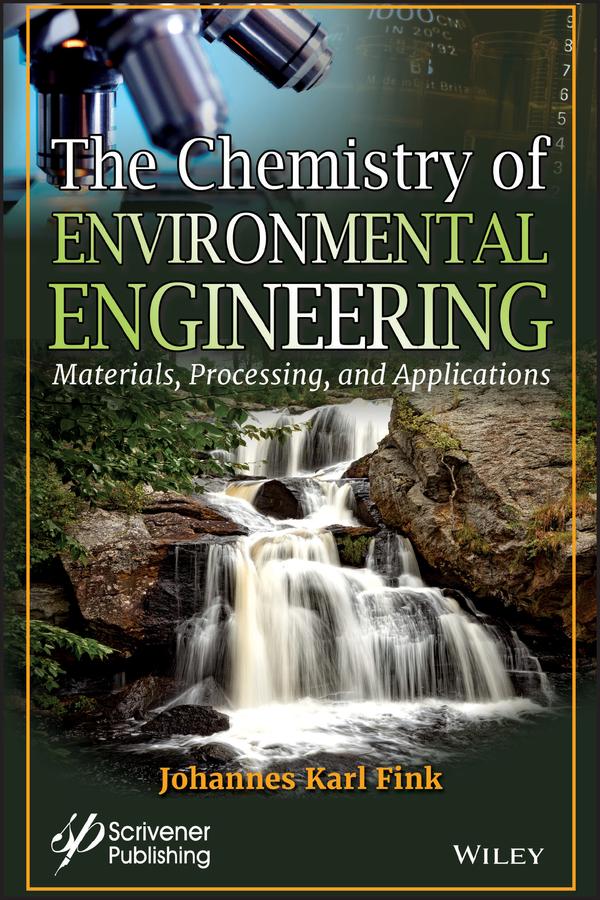
The focus of this book is the chemistry of environmental engineering and its applications, with a special emphasis on the use of polymers in this field. It explores the creation and use of polymers with special properties such as viscoelasticity and interpenetrating networks; examples of which include the creation of polymer-modified asphalt as well as polymers with bacterial adhesion properties. The text contains the issues of polymerization methods, recycling methods, wastewater treatment, types of contaminants, such as microplastics, organic dyes, and pharmaceutical residues.
After a detailed overview of polymers in Chapter 1, their special properties are discussed in the following chapter. Among the topics is the importance of polymers to water purification procedures, since their use in the formation of reverse osmosis membranes do not show biofouling. Chapter 3 details special processing methods, such as atom transfer radical polymerization, enzymatic polymerization, plasma treatment, and several other methods, can be used to meet the urgent demands of industrial applications. Chapter 4 addresses the important environmental issue of recycling methods as they relate to several types of materials such as PET bottles, tire rubbers, asphalt compositions, and other engineering resins. And wastewater treatment is detailed in Chapter 5, in which the types of contaminants, such as microplastics, organic dyes and pharmaceutical residues, are described and special methods for their proper removal are detailed along with types of adsorbents, including biosorbents. Still another important issue for environmental engineering chemistry is pesticides. Chapter 6 is a thorough description of the development and fabrication of special sensors for the detection of certain pesticides. A detailed presentation of the electrical uses of polymer-based composites is given in Chapter 7, which include photovoltaic materials, solar cells, energy storage and dielectric applications, light-emitting polymers, and fast-charging batteries. And recent issues relating to food engineering, such as food ingredient tracing, protein engineering, biosensors and electronic tongues, are presented in Chapter 8. Finally, polymers used for medical applications are described in Chapter 9. These applications include drug delivery, tissue engineering, porous coatings and also the special methods used to fabricate such materials.
Pay easily by card, Klarna, Apple Pay or Google Pay. Not happy? You always have a 14-day money-back guarantee. Read more in our terms. If you have any questions, email us at hello@memmo.org.
Memmo makes studying easier – wherever you are in the world. We bring your course books and smart study tools together in one place: summaries, quizzes, podcasts and flashcards. Plus Ted, your study buddy who answers anything you wonder. Over 75,000 students already study here – built to help you learn faster and stress less.