
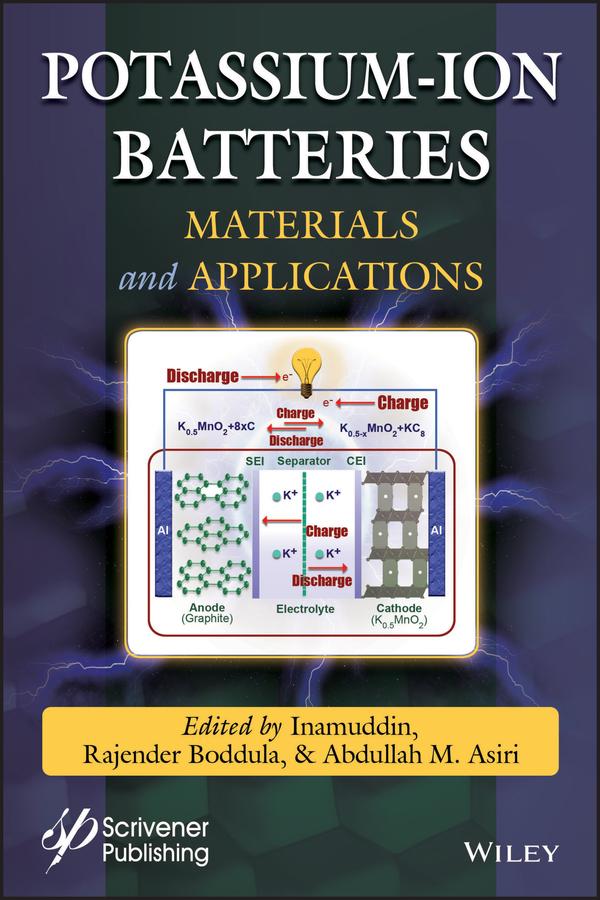
Battery technology is constantly changing, and the concepts and applications of these changes are rapidly becoming increasingly more important as more and more industries and individuals continue to make “greener” choices in their energy sources. As global dependence on fossil fuels slowly wanes, there is a heavier and heavier importance placed on cleaner power sources and methods for storing and transporting that power. Battery technology is a huge part of this global energy revolution.
Potassium-ion batteries were first introduced to the world for energy storage in 2004, over two decades after the invention of lithium-ion batteries. Potassium-ion (or “K-ion”) batteries have many advantages, including low cost, long cycle life, high energy density, safety, and reliability. Potassium-ion batteries are the potential alternative to lithium-ion batteries, fueling a new direction of energy storage research in many applications and across industries.
Potassium-ion Batteries: Materials and Applications explores the concepts, mechanisms, and applications of the next-generation energy technology of potassium-ion batteries. Also included is an in-depth overview of energy storage materials and electrolytes. This is the first book on this technology and serves as a reference guide for electrochemists, chemical engineers, students, research scholars, faculty, and R&D professionals who are working in electrochemistry, solid-state science, material science, ionics, power sources, and renewable energy storage fields.Pay easily by card, Klarna, Apple Pay or Google Pay. Not happy? You always have a 14-day money-back guarantee. Read more in our terms. If you have any questions, email us at hello@memmo.org.
Memmo makes studying easier – wherever you are in the world. We bring your course books and smart study tools together in one place: summaries, quizzes, podcasts and flashcards. Plus Ted, your study buddy who answers anything you wonder. Over 50,000 students already study here – built to help you learn faster and stress less.