
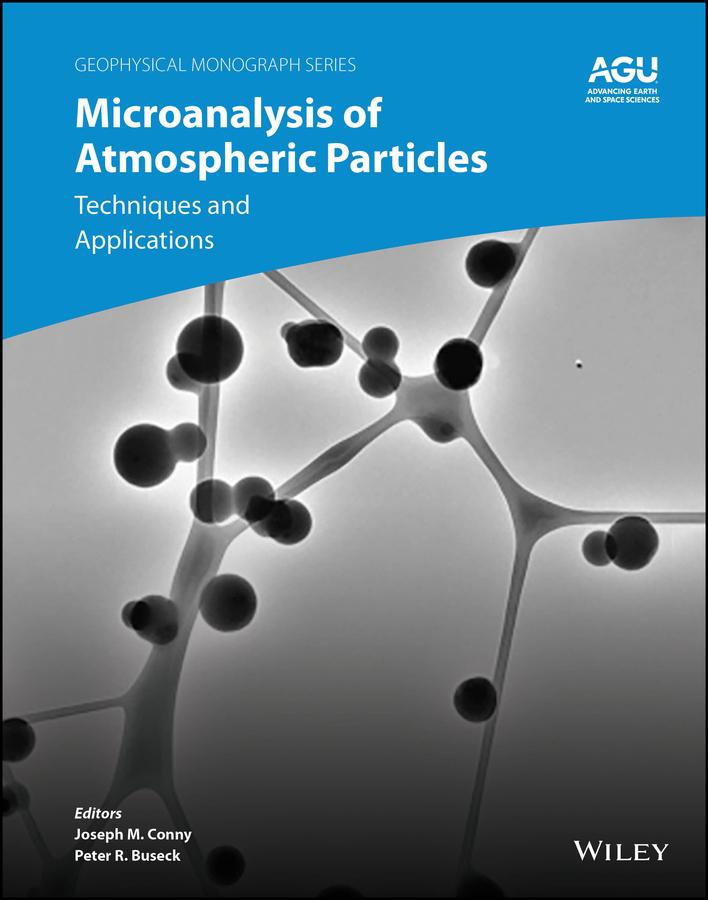
Studying atmospheric particles from a microscopic perspective
Most of what is visible in the atmosphere—such as pollution, dust, haze, fog, and clouds—is due to micrometer- and nanometer-sized aerosol particles. It is important to understand the source, characteristics, and behavior of these small particles as they play a fundamental role in large-scale atmospheric processes.
Microanalysis of Atmospheric Particles: Techniques and Applications presents different microscopic techniques for studying aerosols and explores a range of applications in climate studies and air quality studies.
Volume highlights include:
- Overview of different techniques and applications
- In-depth descriptions of scanning electron microscopy, transmission electron microscopy, electron energy loss spectroscopy, Raman microspectroscopy, and atomic force microscopy
- Techniques for studying physical characteristics and chemical composition
- Methods to examine particle transformation
- Examples including soot, organic aerosols, ice crystals, and sea spray
- Applications for global and regional climate change and urban air quality
The American Geophysical Union promotes discovery in Earth and space science for the benefit of humanity. Its publications disseminate scientific knowledge and provide resources for researchers, students, and professionals.
Pay easily by card, Klarna, Apple Pay or Google Pay. Not happy? You always have a 14-day money-back guarantee. Read more in our terms. If you have any questions, email us at hello@memmo.org.
Memmo makes studying easier – wherever you are in the world. We bring your course books and smart study tools together in one place: summaries, quizzes, podcasts and flashcards. Plus Ted, your study buddy who answers anything you wonder. Over 50,000 students already study here – built to help you learn faster and stress less.