
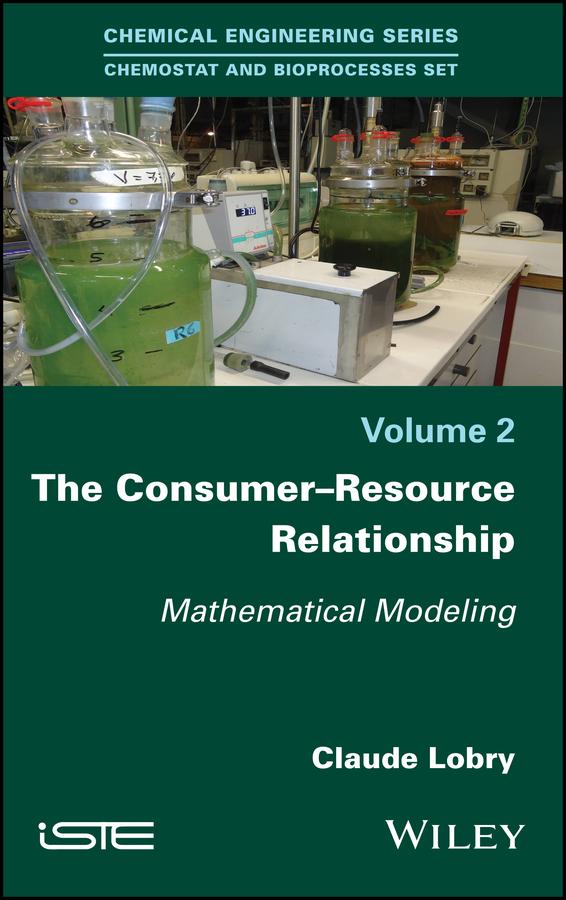
Better known as the "predator-prey relationship," the consumer-resource relationship means the situation where a single species of organisms consumes for survival and reproduction. For example, Escherichia coli consumes glucose, cows consume grass, cheetahs consume baboons; these three very different situations, the first concerns the world of bacteria and the resource is a chemical species, the second concerns mammals and the resource is a plant, and in the final case the consumer and the resource are mammals, have in common the fact of consuming.
In a chemostat, microorganisms generally consume (abiotic) minerals, but not always, bacteriophages consume bacteria that constitute a biotic resource. 'The Chemostat' book dealt only with the case of abiotic resources. Mathematically this amounts to replacing in the two equation system of the chemostat the decreasing function by a general increasing then decreasing function. This simple change has greatly enriched the theory. This book shows in this new framework the problem of competition for the same resource.
Pay easily by card, Klarna, Apple Pay or Google Pay. Not happy? You always have a 14-day money-back guarantee. Read more in our terms. If you have any questions, email us at hello@memmo.org.
Memmo makes studying easier – wherever you are in the world. We bring your course books and smart study tools together in one place: summaries, quizzes, podcasts and flashcards. Plus Ted, your study buddy who answers anything you wonder. Over 50,000 students already study here – built to help you learn faster and stress less.