
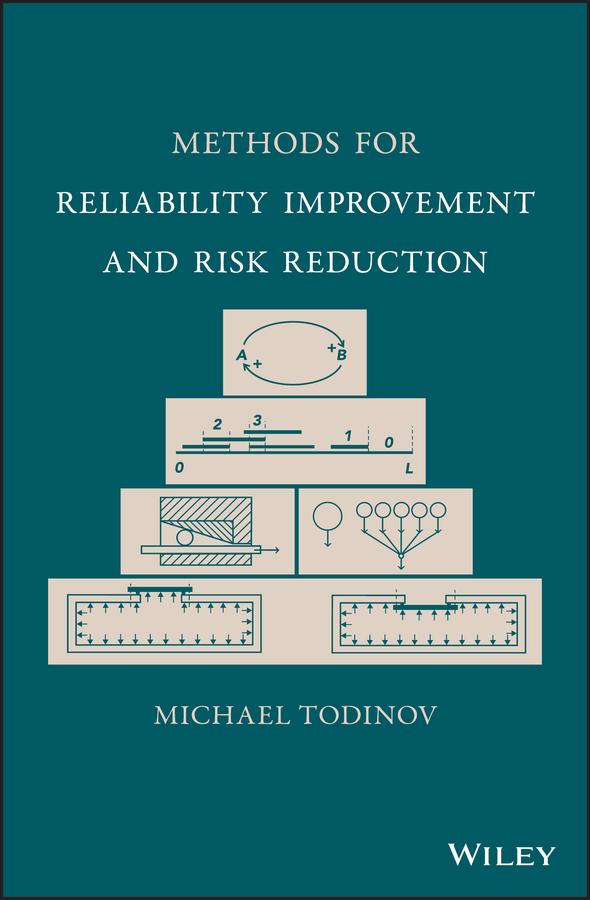
Reliability is one of the most important attributes for the products and processes of any company or organization. This important work provides a powerful framework of domain-independent reliability improvement and risk reducing methods which can greatly lower risk in any area of human activity. It reviews existing methods for risk reduction that can be classified as domain-independent and introduces the following new domain-independent reliability improvement and risk reduction methods:
- Separation
- Stochastic separation
- Introducing deliberate weaknesses
- Segmentation
- Self-reinforcement
- Inversion
- Reducing the rate of accumulation of damage
- Permutation
- Substitution
- Limiting the space and time exposure
- Comparative reliability models
The domain-independent methods for reliability improvement and risk reduction do not depend on the availability of past failure data, domain-specific expertise or knowledge of the failure mechanisms underlying the failure modes. Through numerous examples and case studies, this invaluable guide shows that many of the new domain-independent methods improve reliability at no extra cost or at a low cost.
Using the proven methods in this book, any company and organisation can greatly enhance the reliability of its products and operations.
Pay easily by card, Klarna, Apple Pay or Google Pay. Not happy? You always have a 14-day money-back guarantee. Read more in our terms. If you have any questions, email us at hello@memmo.org.
Memmo makes studying easier – wherever you are in the world. We bring your course books and smart study tools together in one place: summaries, quizzes, podcasts and flashcards. Plus Ted, your study buddy who answers anything you wonder. Over 50,000 students already study here – built to help you learn faster and stress less.