
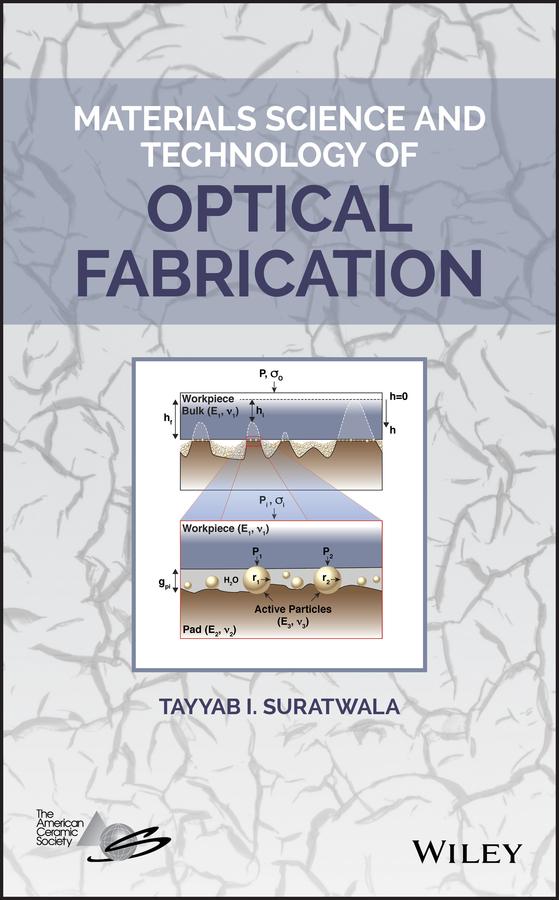
Covers the fundamental science of grinding and polishing by examining the chemical and mechanical interactions over many scale lengths
Manufacturing next generation optics has been, and will continue to be, enablers for enhancing the performance of advanced laser, imaging, and spectroscopy systems. This book reexamines the age-old field of optical fabrication from a materials-science perspective, specifically the multiple, complex interactions between the workpiece (optic), slurry, and lap. It also describes novel characterization and fabrication techniques to improve and better understand the optical fabrication process, ultimately leading to higher quality optics with higher yield.
Materials Science and Technology of Optical Fabrication is divided into two major parts. The first part describes the phenomena and corresponding process parameters affecting both the grinding and polishing processes during optical fabrication. It then relates them to the critical resulting properties of the optic (surface quality, surface figure, surface roughness, and material removal rate). The second part of the book covers a number of related topics including: developed forensic tools used to increase yield of optics with respect to surface quality (scratch/dig) and fracture loss; novel characterization and fabrication techniques used to understand/quantify the fundamental phenomena described in the first part of the book; novel and recent optical fabrication processes and their connection with the fundamental interactions; and finally, special techniques utilized to fabricate optics with high damage resistance.
- Focuses on the fundamentals of grinding and polishing, from a materials science viewpoint, by studying the chemical and mechanical interactions/phenomena over many scale lengths between the workpiece, slurry, and lap
- Explains how these phenomena affect the major characteristics of the optic workpiece—namely surface figure, surface quality, surface roughness, and material removal rate
- Describes methods to improve the major characteristics of the workpiece as well as improve process yield, such as through fractography and scratch forensics
- Covers novel characterization and fabrication techniques used to understand and quantify the fundamental phenomena of various aspects of the workpiece or fabrication process
- Details novel and recent optical fabrication processes and their connection with the fundamental interactions
Materials Science and Technology of Optical Fabrication is an excellent guidebook for process engineers, fabrication engineers, manufacturing engineers, optical scientists, and opticians in the optical fabrication industry. It will also be helpful for students studying material science and applied optics/photonics.
Pay easily by card, Klarna, Apple Pay or Google Pay. Not happy? You always have a 14-day money-back guarantee. Read more in our terms. If you have any questions, email us at hello@memmo.org.
Memmo makes studying easier – wherever you are in the world. We bring your course books and smart study tools together in one place: summaries, quizzes, podcasts and flashcards. Plus Ted, your study buddy who answers anything you wonder. Over 50,000 students already study here – built to help you learn faster and stress less.