
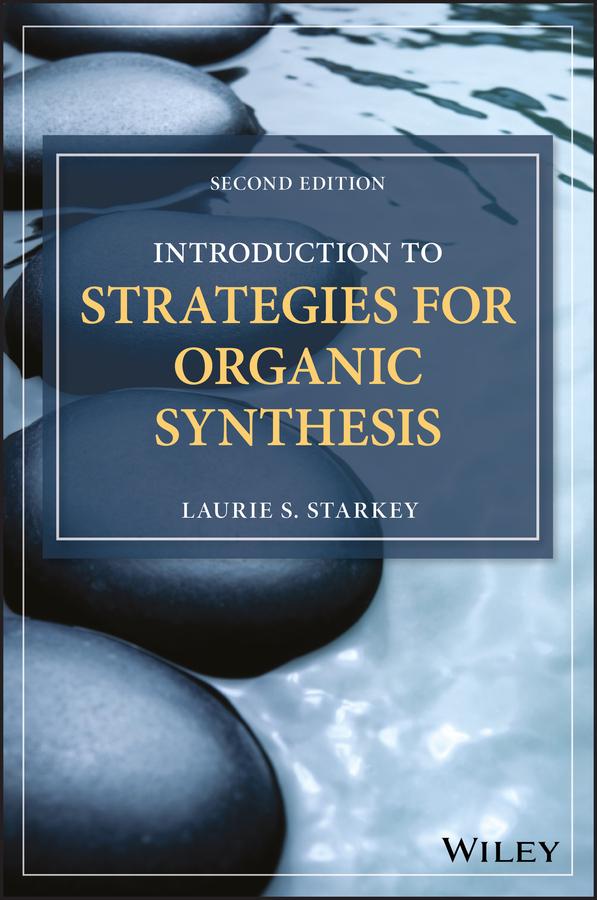
Bridging the Gap Between Organic Chemistry Fundamentals and Advanced Synthesis Problems
Introduction to Strategies of Organic Synthesis bridges the knowledge gap between sophomore-level organic chemistry and senior-level or graduate-level synthesis to help students more easily adjust to a synthetic chemistry mindset. Beginning with a thorough review of reagents, functional groups, and their reactions, this book prepares students to progress into advanced synthetic strategies. Major reactions are presented from a mechanistic perspective and then again from a synthetic chemist’s point of view to help students shift their thought patterns and teach them how to imagine the series of reactions needed to reach a desired target molecule.
Success in organic synthesis requires not only familiarity with common reagents and functional group interconversions, but also a deep understanding of functional group behavior and reactivity. This book provides clear explanations of such reactivities and explicitly teaches students how to make logical disconnections of a target molecule.
This new Second Edition of Introduction to Strategies for Organic Synthesis:
- Reviews fundamental organic chemistry concepts including functional group transformations, reagents, stereochemistry, and mechanisms
- Explores advanced topics including protective groups, synthetic equivalents, and transition-metal mediated coupling reactions
- Helps students envision forward reactions and backwards disconnections as a matter of routine
- Gives students confidence in performing retrosynthetic analyses of target molecules Includes fully-worked examples, literature-based problems, and over 450 chapter problems with detailed solutions
- Provides clear explanations in easy-to-follow, student-friendly language
- Focuses on the strategies of organic synthesis rather than a catalogue of reactions and modern reagents
The prospect of organic synthesis can be daunting at the outset, but this book serves as a useful stepping stone to refresh existing knowledge of organic chemistry while introducing the general strategies of synthesis. Useful as both a textbook and a bench reference, this text provides value to graduate and advanced undergraduate students alike.
Pay easily by card, Klarna, Apple Pay or Google Pay. Not happy? You always have a 14-day money-back guarantee. Read more in our terms. If you have any questions, email us at hello@memmo.org.
Memmo makes studying easier – wherever you are in the world. We bring your course books and smart study tools together in one place: summaries, quizzes, podcasts and flashcards. Plus Ted, your study buddy who answers anything you wonder. Over 75,000 students already study here – built to help you learn faster and stress less.