
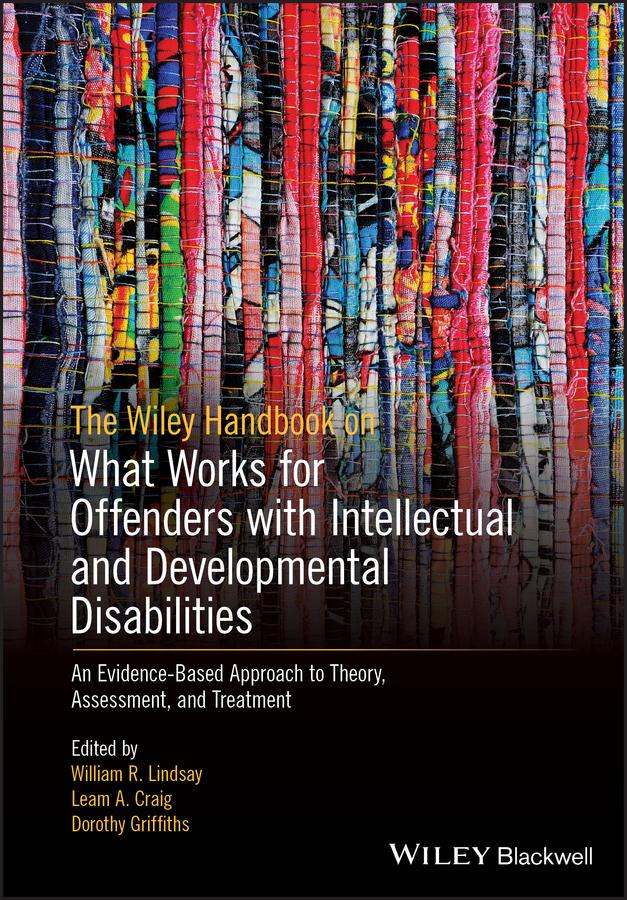
Brings together the growing amount of evidence on the assessment and treatment of offenders with intellectual and developmental disabilities.
Written by a team of international experts, this comprehensive and informative book provides a contemporary picture of evidence-based practice for offenders with intellectual and developmental disabilities. By adopting a scientist-practitioner position directed at an academic level with practitioner guidelines, it provides a valuable reference source for professionals from allied disciplines who are using or seeking to apply research for this client group.
The Wiley Handbook of What Works for Offenders with Intellectual and Developmental Disabilities: An Evidence Based Approach to Theory, Assessment and Treatment is divided into five sections: Introduction, Phenotypes & Genotypes and Offending Behavior, Validated Assessments, Treatment, and Conclusions. The Introduction offers an overview of the entire book and is followed by a second overview covering the ethics of evidence-based practice. After that come chapters on protecting the rights of people with intellectual disabilities in correctional settings, and behavioral and cognitive phenotypes in genetic disorders associated with offending. The third part of the book studies the assessment of individuals with anger and violence issues, inappropriate sexual behavior, alcohol abuse, and emotional difficulties. Next comes a section that looks how to offenders can be treated. The final section discusses future directions and requirements for offenders with intellectual and developmental disabilities.
- Provides an overview of the ethical challenges and issues faced by those who work with intellectually and developmentally disabled offenders
- Focuses on proof of treatment effectiveness and validation of assessment methods to direct readers toward "What Works"
- Features contributions from authors across the entire English-speaking world including the UK, US, Canada, Australia, and New Zealand
The Wiley Handbook of What Works for Offenders with Intellectual and Developmental Disabilities: An Evidence Based Approach to Theory, Assessment and Treatment will appeal to all who work in the field of offenders with intellectual and developmental disabilities, including nursing staff, social workers and probation officers, medical and psychology staff, and more.
Pay easily by card, Klarna, Apple Pay or Google Pay. Not happy? You always have a 14-day money-back guarantee. Read more in our terms. If you have any questions, email us at hello@memmo.org.
Memmo makes studying easier – wherever you are in the world. We bring your course books and smart study tools together in one place: summaries, quizzes, podcasts and flashcards. Plus Ted, your study buddy who answers anything you wonder. Over 50,000 students already study here – built to help you learn faster and stress less.