
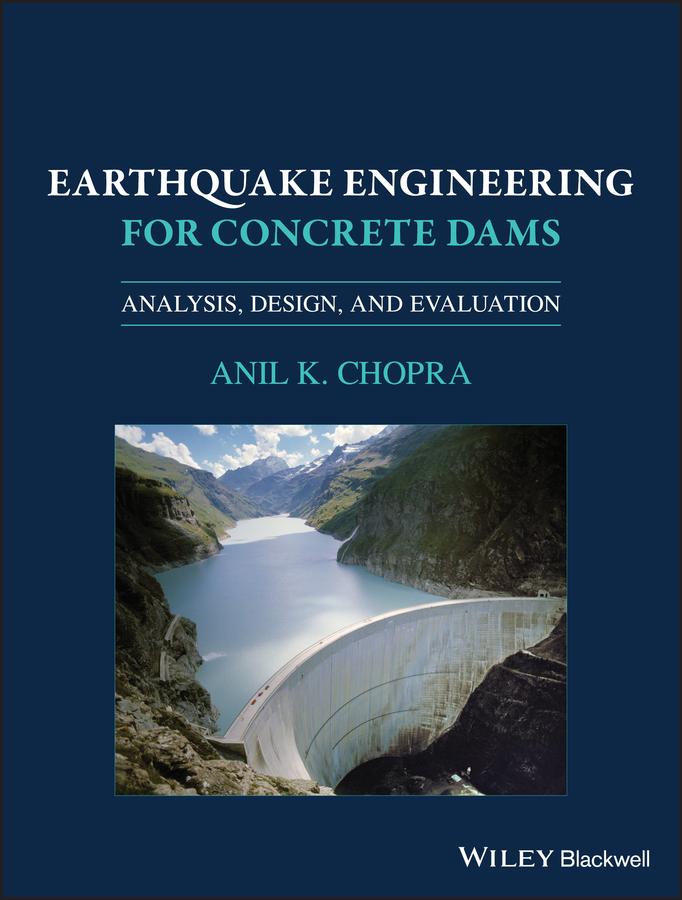
A comprehensive guide to modern-day methods for earthquake engineering of concrete dams
Earthquake analysis and design of concrete dams has progressed from static force methods based on seismic coefficients to modern procedures that are based on the dynamics of dam–water–foundation systems. Earthquake Engineering for Concrete Dams offers a comprehensive, integrated view of this progress over the last fifty years. The book offers an understanding of the limitations of the various methods of dynamic analysis used in practice and develops modern methods that overcome these limitations.
This important book:
- Develops procedures for dynamic analysis of two-dimensional and three-dimensional models of concrete dams
- Identifies system parameters that influence their response
- Demonstrates the effects of dam–water–foundation interaction on earthquake response
- Identifies factors that must be included in earthquake analysis of concrete dams
- Examines design earthquakes as defined by various regulatory bodies and organizations
- Presents modern methods for establishing design spectra and selecting ground motions
- Illustrates application of dynamic analysis procedures to the design of new dams and safety evaluation of existing dams.
Written for graduate students, researchers, and professional engineers, Earthquake Engineering for Concrete Dams offers a comprehensive view of the current procedures and methods for seismic analysis, design, and safety evaluation of concrete dams.
Pay easily by card, Klarna, Apple Pay or Google Pay. Not happy? You always have a 14-day money-back guarantee. Read more in our terms. If you have any questions, email us at hello@memmo.org.
Memmo makes studying easier – wherever you are in the world. We bring your course books and smart study tools together in one place: summaries, quizzes, podcasts and flashcards. Plus Ted, your study buddy who answers anything you wonder. Over 50,000 students already study here – built to help you learn faster and stress less.