
Bacteria in various habitats are subject to continuously changing environmental conditions, such as nutrient deprivation, heat and cold stress, UV radiation, oxidative stress, dessication, acid stress, nitrosative stress, cell envelope stress, heavy metal exposure, osmotic stress, and others. In order to survive, they have to respond to these conditions by adapting their physiology through sometimes drastic changes in gene expression. In addition they may adapt by changing their morphology, forming biofilms, fruiting bodies or spores, filaments, Viable But Not Culturable (VBNC) cells or moving away from stress compounds via chemotaxis. Changes in gene expression constitute the main component of the bacterial response to stress and environmental changes, and involve a myriad of different mechanisms, including (alternative) sigma factors, bi- or tri-component regulatory systems, small non-coding RNA’s, chaperones, CHRIS-Cas systems, DNA repair, toxin-antitoxin systems, the stringent response, efflux pumps, alarmones, and modulation of the cell envelope or membranes, to name a few. Many regulatory elements are conserved in different bacteria; however there are endless variations on the theme and novel elements of gene regulation in bacteria inhabiting particular environments are constantly being discovered. Especially in (pathogenic) bacteria colonizing the human body a plethora of bacterial responses to innate stresses such as pH, reactive nitrogen and oxygen species and antibiotic stress are being described. An attempt is made to not only cover model systems but give a broad overview of the stress-responsive regulatory systems in a variety of bacteria, including medically important bacteria, where elucidation of certain aspects of these systems could lead to treatment strategies of the pathogens. Many of the regulatory systems being uncovered are specific, but there is also considerable “cross-talk” between different circuits.
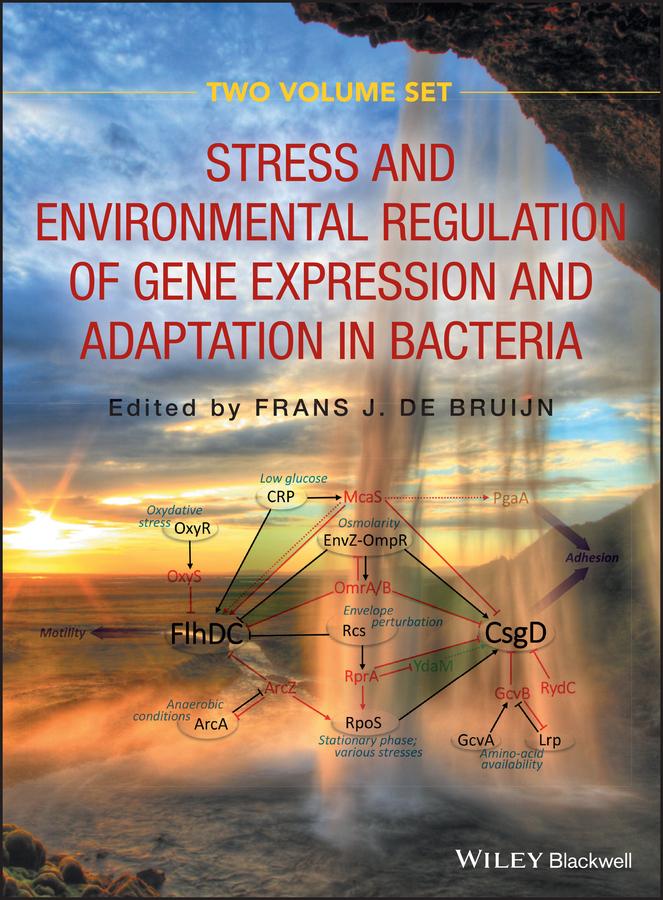
Stress and Environmental Regulation of Gene Expression and Adaptation in Bacteria is a comprehensive two-volume work bringing together both review and original research articles on key topics in stress and environmental control of gene expression in bacteria.
Volume One contains key overview chapters, as well as content on one/two/three component regulatory systems and stress responses, sigma factors and stress responses, small non-coding RNAs and stress responses, toxin-antitoxin systems and stress responses, stringent response to stress, responses to UV irradiation, SOS and double stranded systems repair systems and stress, adaptation to both oxidative and osmotic stress, and desiccation tolerance and drought stress.
Volume Two covers heat shock responses, chaperonins and stress, cold shock responses, adaptation to acid stress, nitrosative stress, and envelope stress, as well as iron homeostasis, metal resistance, quorum sensing, chemotaxis and biofilm formation, and viable but not culturable (VBNC) cells.Covering the full breadth of current stress and environmental control of gene expression studies and expanding it towards future advances in the field, these two volumes are a one-stop reference for (non) medical molecular geneticists interested in gene regulation under stress.
Pay easily by card, Klarna, Apple Pay or Google Pay. Not happy? You always have a 14-day money-back guarantee. Read more in our terms. If you have any questions, email us at hello@memmo.org.
Memmo makes studying easier – wherever you are in the world. We bring your course books and smart study tools together in one place: summaries, quizzes, podcasts and flashcards. Plus Ted, your study buddy who answers anything you wonder. Over 50,000 students already study here – built to help you learn faster and stress less.