
"Elliott and Spence have produced a tight, teachable, and timely primer on media ethics for users and creators of information in the digital age. Pitched at just the right depth of detail to provide a big picture contextualization of changing media practices grounded in concerns for democracy and the public good, the book explores and reflects the implications of the convergence of the Fourth and Fifth Estates with an open-access, hyper-linked architecture which invites self-reflective practice on the part of its users”
Philip Gordon, Utah Valley University
2019 PROSE Award Finalist in the Media & Cultural Studies category!
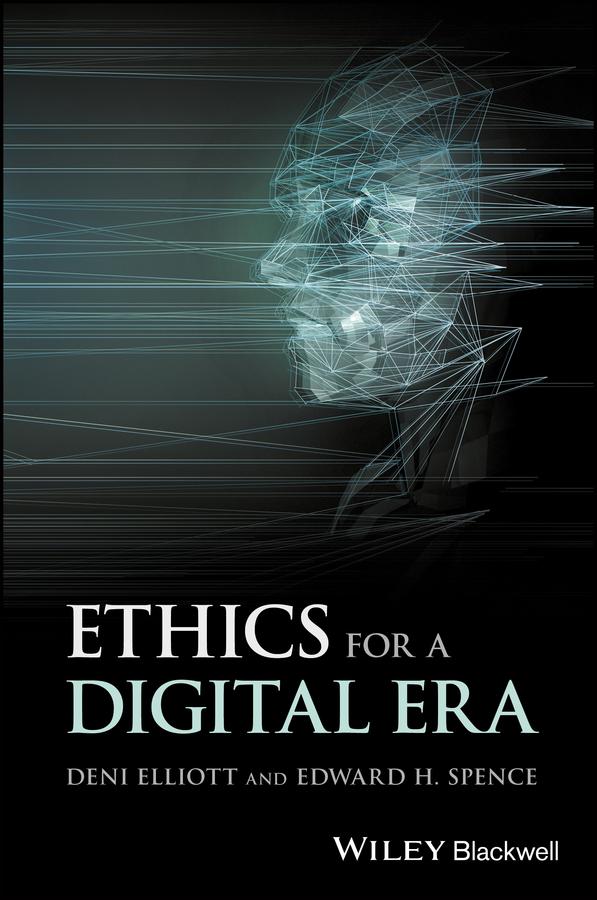
The rapid and ongoing evolution of digital technologies has transformed the waythe world communicates and digests information. Fueled by a 24-hour news cycleand post-truth politics, media consumption and the technologies that drive ithave become more influential in shaping public opinion, and it has become more imperative than ever to examine their social and ethical consequences. Ethics for a Digital Era provides a penetrating analysis of the ethical issues that have emerged as the digital revolution progresses, including journalistic practices that impact on the truth, reliability, and trustworthiness of communicating information. The volume explores new methods and models for ethical inquiry in a digital world, and maps out guidelines for web-based news producers and users to conceptualize ethical issuesand analyze ethically questionable acts.
In each of three thematic sections, Deni Elliott and Edward H. Spence reflect upon shifts in media ethics as contemporary mass communication combines traditional analog practices with new forms like blogs, vlogs, podcasts, and social media posts, and evolves into an interactive medium with users who both produce and consume the news. Later chapters apply a process of normative decision-making to some of the most important issues which arise in these interactions, and encourage users to bridge their own thinking between the virtual and physical worlds of information and its communication.
Timely and thought-provoking, Ethics for a Digital Era is an invaluable resource for undergraduate and graduate students in media and mass communication, applied ethics, and journalism, as well as general readers interested in the ethical impact of their media consumption.
Pay easily by card, Klarna, Apple Pay or Google Pay. Not happy? You always have a 14-day money-back guarantee. Read more in our terms. If you have any questions, email us at hello@memmo.org.
Memmo makes studying easier – wherever you are in the world. We bring your course books and smart study tools together in one place: summaries, quizzes, podcasts and flashcards. Plus Ted, your study buddy who answers anything you wonder. Over 75,000 students already study here – built to help you learn faster and stress less.