
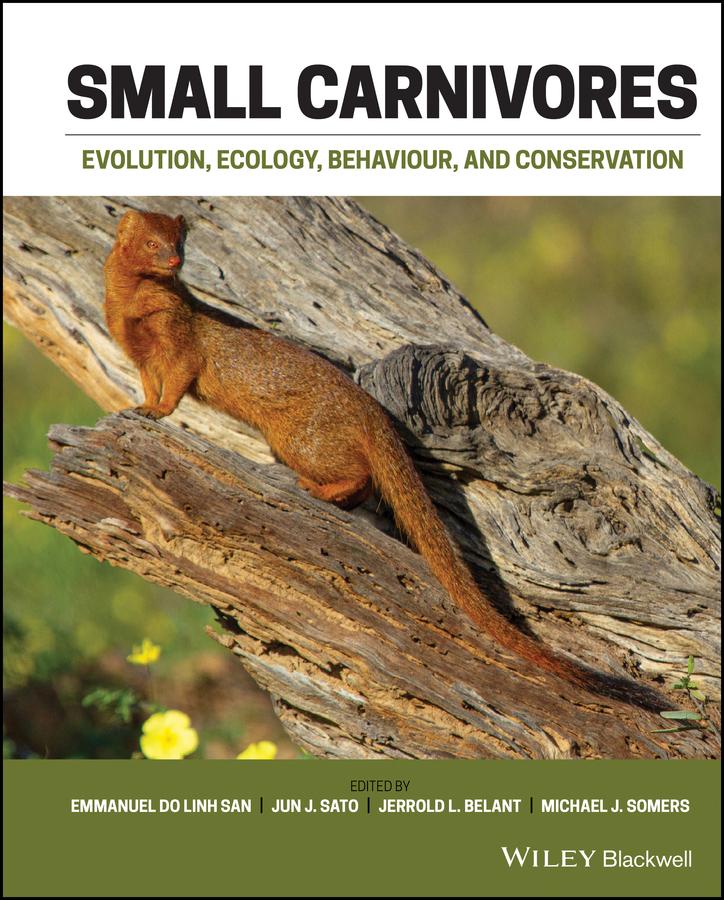
This book focuses on the 232 species of the mammalian Order Carnivora with an average body mass < 21.5 kg. Small carnivores inhabit virtually all of the Earth's ecosystems, adopting terrestrial, semi-fossorial, (semi-)arboreal or (semi-)aquatic lifestyles. They occupy multiple trophic levels and therefore play important roles in the regulation of ecosystems, such as natural pest control, seed dispersal and nutrient cycling. In areas where humans have extirpated large carnivores, small carnivores may become the dominant predators, which may increase their abundance ("mesopredator release") to the point that they can sometimes destabilize communities, drive local extirpations and reduce overall biodiversity. On the other hand, one third of the world's small carnivores are threatened or near threatened with extinction. This results from regionally burgeoning human populations' industrial and agricultural activities, causing habitat reduction, destruction, fragmentation and pollution. Overexploitation, persecution and the impacts of introduced predators, competitors, and pathogens have also negatively affected many small carnivore species. Although small carnivores have been intensively studied over the past decades, bibliometric studies showed that they have not received the same attention given to large carnivores. Furthermore, there is huge disparity in how research efforts on small carnivores have been distributed, with some species intensively studied and others superficially or not at all. This book aims at filling a gap in the scientific literature by elucidating the important roles of, and documenting the latest knowledge on, the world's small carnivores.
"This is a book that has been needed for decades. It is the first compendium of recent research on a group of mammals which has received almost no attention before the early 1970s. This book covers a wide range of subdisciplines and techniques and should be considered a solid baseline for further research on this little-known group of highly interesting mammals. As our knowledge regarding how ecosystems function increases, then the valuable role of small carnivores and the necessity for their conservation should be regarded as of paramount importance. The topics covered in this book should therefore be of great interest not only to academics and wildlife researchers, but also to the interested layman."
Professor Anne Rasa, Ethologist
Pay easily by card, Klarna, Apple Pay or Google Pay. Not happy? You always have a 14-day money-back guarantee. Read more in our terms. If you have any questions, email us at hello@memmo.org.
Memmo makes studying easier – wherever you are in the world. We bring your course books and smart study tools together in one place: summaries, quizzes, podcasts and flashcards. Plus Ted, your study buddy who answers anything you wonder. Over 50,000 students already study here – built to help you learn faster and stress less.