
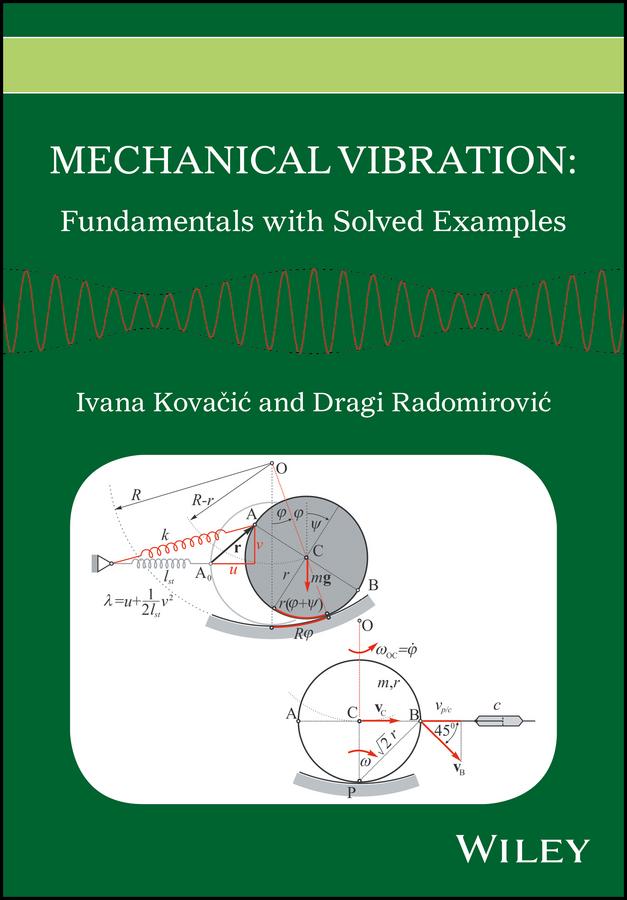
Mechanical oscillators in Lagrange's formalism – a thorough problem-solved approach
This book takes a logically organized, clear and thorough problem-solved approach at instructing the reader in the application of Lagrange's formalism to derive mathematical models for mechanical oscillatory systems, while laying a foundation for vibration engineering analyses and design.
Each chapter contains brief introductory theory portions, followed by a large number of fully solved examples. These problems, inherent in the design and analysis of mechanical systems and engineering structures, are characterised by a complexity and originality that is rarely found in textbooks.
Numerous pedagogical features, explanations and unique techniques that stem from the authors’ extensive teaching and research experience are included in the text in order to aid the reader with comprehension and retention. The book is rich visually, including numerous original figures with high-standard sketches and illustrations of mechanisms.
Key features:
- Distinctive content including a large number of different and original oscillatory examples, ranging from simple to very complex ones.
- Contains many important and useful hints for treating mechanical oscillatory systems.
- Each chapter is enriched with an Outline and Objectives, Chapter Review and Helpful Hints.
Mechanical Vibration: Fundamentals with Solved Examples is essential reading for senior and graduate students studying vibration, university professors, and researchers in industry.
Pay easily by card, Klarna, Apple Pay or Google Pay. Not happy? You always have a 14-day money-back guarantee. Read more in our terms. If you have any questions, email us at hello@memmo.org.
Memmo makes studying easier – wherever you are in the world. We bring your course books and smart study tools together in one place: summaries, quizzes, podcasts and flashcards. Plus Ted, your study buddy who answers anything you wonder. Over 50,000 students already study here – built to help you learn faster and stress less.