
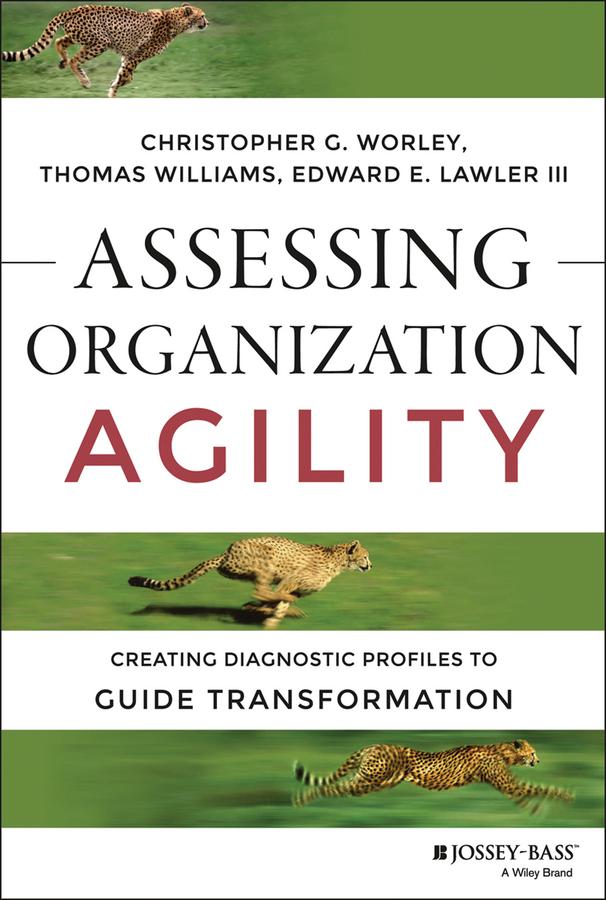
Assessing Organization Agility provides a clear, concise roadmap to improved implementation of change. Written by two organizational researchers at USC's Center for Effective Organizations and a management consultant with Strategy& (formerly Booz & Company), this book provides the means for assessing an organization's agility and formulating an improvement plan. Beginning with a discussion about the meaning of "agility," the authors enumerate the various contributing factors that affect how quickly an organization responds to change, and the efficiency of the response. An agility survey shows readers how their own organization compares in terms of both perception and implementation, allowing the formulation of an "Agility Profile" that can point out strengths while highlighting areas in need of improvement. Case studies demonstrate the real-world impact of effective agility strategy, and example scenarios illustrate improved responses by each agility "type."
Eighty percent of large-scale organizations fail to meet their objectives, and poor agility is often to blame. Organizations respond to changes in the marketplace, economy, and society by implementing changes in their processes and procedures, but planning and implementing change takes time. During that time, the context of the initial decision frequently evolves, leaving the organization one step behind. Agility is the ability to quickly implement change without sacrificing strategy, and Assessing Organization Agility helps readers to:
- Discover the organizational/operational factors that contribute to agility
- Assess current agility from all perspectives, highlighting areas for improvement
- Implement processes and procedures that streamline change events
- Maintain forward trajectory with adjustments to strategy and implementation
The current pace of technical, competitive, and environmental change is faster than ever before, and response requirements are far more complex and sophisticated. In this turbulent environment, agility can mean the difference between success and stagnation. Assessing Organization Agility asks the questions and provides the answers that lead to better organizational reflex and more effective response.
Pay easily by card, Klarna, Apple Pay or Google Pay. Not happy? You always have a 14-day money-back guarantee. Read more in our terms. If you have any questions, email us at hello@memmo.org.
Memmo makes studying easier – wherever you are in the world. We bring your course books and smart study tools together in one place: summaries, quizzes, podcasts and flashcards. Plus Ted, your study buddy who answers anything you wonder. Over 50,000 students already study here – built to help you learn faster and stress less.