
Microstructural characterization is usually achieved by allowing some form of probe to interact with a carefully prepared specimen. The most commonly used probes are visible light, X-ray radiation, a high-energy electron beam, or a sharp, flexible needle. These four types of probe form the basis for optical microscopy, X-ray diffraction, electron microscopy, and scanning probe microscopy.
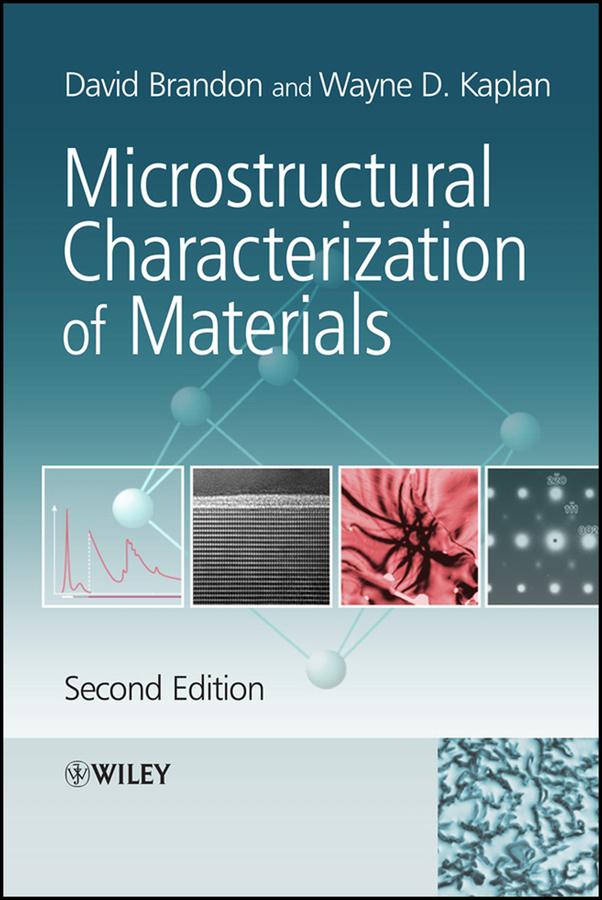
Microstructural Characterization of Materials, 2nd Edition is an introduction to the expertise involved in assessing the microstructure of engineering materials and to the experimental methods used for this purpose. Similar to the first edition, this 2nd edition explores the methodology of materials characterization under the three headings of crystal structure, microstructural morphology, and microanalysis. The principal methods of characterization, including diffraction analysis, optical microscopy, electron microscopy, and chemical microanalytical techniques are treated both qualitatively and quantitatively. An additional chapter has been added to the new edition to cover surface probe microscopy, and there are new sections on digital image recording and analysis, orientation imaging microscopy, focused ion-beam instruments, atom-probe microscopy, and 3-D image reconstruction. As well as being fully updated, this second edition also includes revised and expanded examples and exercises, with a solutions manual available at http://develop.wiley.co.uk/microstructural2e/
Microstructural Characterization of Materials, 2nd Edition will appeal to senior undergraduate and graduate students of material science, materials engineering, and materials chemistry, as well as to qualified engineers and more advanced researchers, who will find the book a useful and comprehensive general reference source.
Microstructural Characterization of Materials, 2nd Edition is an introduction to the expertise involved in assessing the microstructure of engineering materials and to the experimental methods used for this purpose. Similar to the first edition, this 2nd edition explores the methodology of materials characterization under the three headings of crystal structure, microstructural morphology, and microanalysis. The principal methods of characterization, including diffraction analysis, optical microscopy, electron microscopy, and chemical microanalytical techniques are treated both qualitatively and quantitatively. An additional chapter has been added to the new edition to cover surface probe microscopy, and there are new sections on digital image recording and analysis, orientation imaging microscopy, focused ion-beam instruments, atom-probe microscopy, and 3-D image reconstruction. As well as being fully updated, this second edition also includes revised and expanded examples and exercises, with a solutions manual available at http://develop.wiley.co.uk/microstructural2e/
Microstructural Characterization of Materials, 2nd Edition will appeal to senior undergraduate and graduate students of material science, materials engineering, and materials chemistry, as well as to qualified engineers and more advanced researchers, who will find the book a useful and comprehensive general reference source.
Pay easily by card, Klarna, Apple Pay or Google Pay. Not happy? You always have a 14-day money-back guarantee. Read more in our terms. If you have any questions, email us at hello@memmo.org.
Memmo makes studying easier – wherever you are in the world. We bring your course books and smart study tools together in one place: summaries, quizzes, podcasts and flashcards. Plus Ted, your study buddy who answers anything you wonder. Over 50,000 students already study here – built to help you learn faster and stress less.