
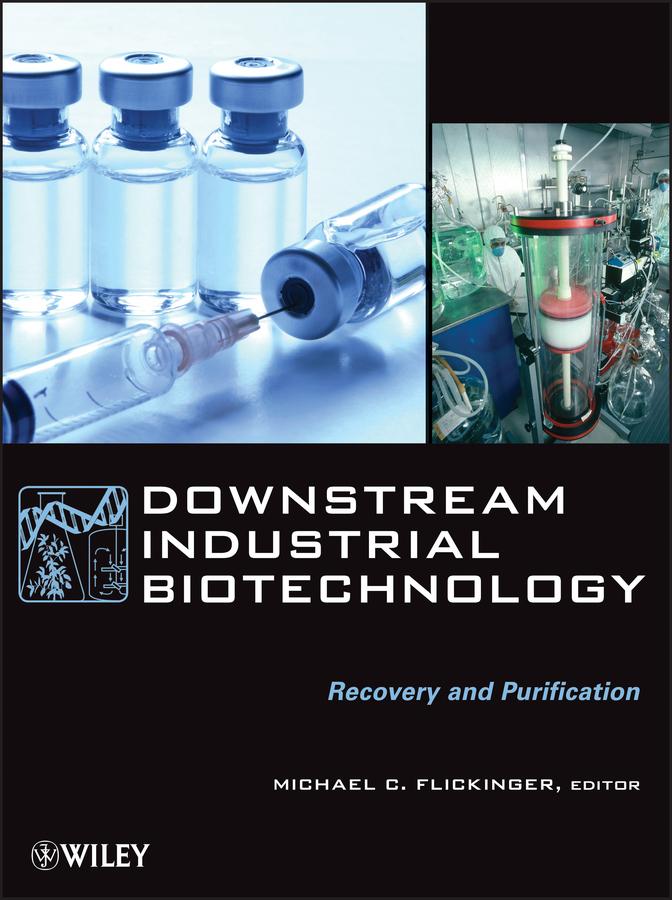
An affordable, easily accessible desk reference on biomanufacturing, focused on downstream recovery and purification
Advances in the fundamental knowledge surrounding biotechnology, novel materials, and advanced engineering approaches continue to be translated into bioprocesses that bring new products to market at a significantly faster pace than most other industries. Industrial scale biotechnology and new manufacturing methods are revolutionizing medicine, environmental monitoring and remediation, consumer products, food production, agriculture, and forestry, and continue to be a major area of research.
The downstream stage in industrial biotechnology refers to recovery, isolation, and purification of the microbial products from cell debris, processing medium and contaminating biomolecules from the upstream process into a finished product such as biopharmaceuticals and vaccines.
Downstream process design has the greatest impact on overall biomanufacturing cost because not only does the biochemistry of different products ( e.g., peptides, proteins, hormones, antibiotics, and complex antigens) dictate different methods for the isolation and purification of these products, but contaminating byproducts can also reduce overall process yield, and may have serious consequences on clinical safety and efficacy. Therefore downstream separation scientists and engineers are continually seeking to eliminate, or combine, unit operations to minimize the number of process steps in order to maximize product recovery at a specified concentration and purity.
Based on Wiley’s Encyclopedia of Industrial Biotechnology: Bioprocess, Bioseparation, and Cell Technology, this volume features fifty articles that provide information on down- stream recovery of cells and protein capture; process development and facility design; equipment; PAT in downstream processes; downstream cGMP operations; and regulatory compliance.
It covers:
- Cell wall disruption and lysis
- Cell recovery by centrifugation and filtration
- Large-scale protein chromatography
- Scale down of biopharmaceutical purification operations
- Lipopolysaccharide removal
- Porous media in biotechnology
- Equipment used in industrial protein purification
- Affinity chromatography
- Antibody purification, monoclonal and polyclonal
- Protein aggregation, precipitation and crystallization
- Freeze-drying of biopharmaceuticals
- Biopharmaceutical facility design and validation
- Pharmaceutical bioburden testing
- Regulatory requirements
Ideal for graduate and advanced undergraduate courses on biomanufacturing, biochemical engineering, biopharmaceutical facility design, biochemistry, industrial microbiology, gene expression technology, and cell culture technology, Downstream Industrial Biotechnology is also a highly recommended resource for industry professionals and libraries.
Pay easily by card, Klarna, Apple Pay or Google Pay. Not happy? You always have a 14-day money-back guarantee. Read more in our terms. If you have any questions, email us at hello@memmo.org.
Memmo makes studying easier – wherever you are in the world. We bring your course books and smart study tools together in one place: summaries, quizzes, podcasts and flashcards. Plus Ted, your study buddy who answers anything you wonder. Over 50,000 students already study here – built to help you learn faster and stress less.