
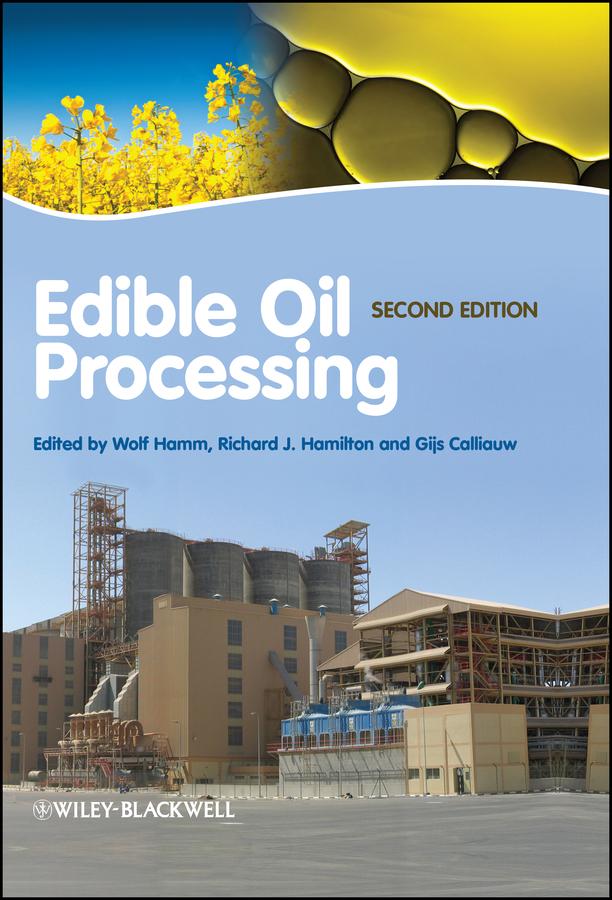
Oils and fats are almost ubiquitous in food processing, whether naturally occurring in foods or added as ingredients that bring functional benefits. Whilst levels of fat intake must be controlled in order to avoid obesity and other health problems, it remains the fact that fats (along with proteins and carbohydrates) are one of the three macronutrients and therefore an essential part of a healthy diet.
The ability to process oils and fats to make them acceptable as part of our food supplies is a key component in our overall knowledge of them. Without this ability, the food that we consume would be totally different, and much of the flexibility available to us as a result of the application of processing techniques would be lost. Obviously we need to know how to process fatty oils, but we also need to know how best to use them once they have been processed.
This second edition of Edible Oil Processing presents a valuable overview of the technology and applications behind the subject.
It covers the latest technologies which address new environmental and nutritional requirements as well as the current state of world edible oil markets.
This book is intended for food scientists and technologists who use oils and fats in food formulations, as well as chemists and technologists working in edible oils and fats processing.
Pay easily by card, Klarna, Apple Pay or Google Pay. Not happy? You always have a 14-day money-back guarantee. Read more in our terms. If you have any questions, email us at hello@memmo.org.
Memmo makes studying easier – wherever you are in the world. We bring your course books and smart study tools together in one place: summaries, quizzes, podcasts and flashcards. Plus Ted, your study buddy who answers anything you wonder. Over 50,000 students already study here – built to help you learn faster and stress less.