
Understand the context of negotiations to achieve better results
Negotiation has always been at the heart of solving problems at work. Yet today, when people in organizations are asked to do more with less, be responsive 24/7, and manage in rapidly changing environments, negotiation is more essential than ever. What has been missed in much of the literature of the past 30 years is that negotiations in organizations always take place within a context—of organizational culture, of prior negotiations, of power relationships—that dictates which issues are negotiable and by whom. When we negotiate for new opportunities or increased flexibility, we never do it in a vacuum. We challenge the status quo and we build out the path for others to negotiate those issues after us. In this way, negotiating for ourselves at work can create small wins that can grow into something bigger, for ourselves and our organizations. Seen in this way, negotiation becomes a tool for addressing ineffective practices and outdated assumptions, and for creating change.
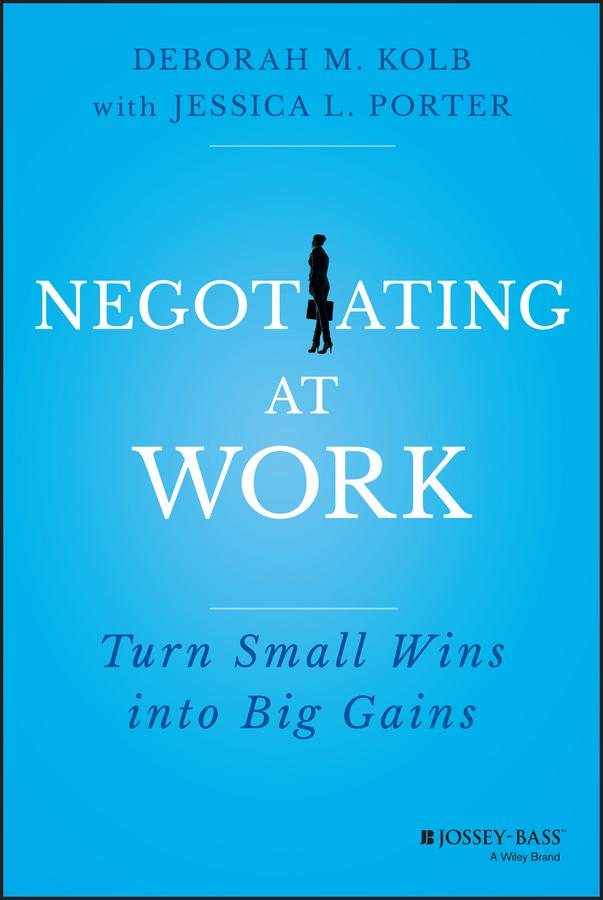
Negotiating at Work offers practical advice for managing your own workplace negotiations: how to get opportunities, promotions, flexibility, buy-in, support, and credit for your work. It does so within the context of organizational dynamics, recognizing that to negotiate with someone who has more power adds a level of complexity. The is true when we negotiate with our superiors, and also true for individuals currently under represented in senior leadership roles, whose managers may not recognize certain issues as barriers or obstacles.
Negotiating at Work is rooted in real-life cases of professionals from a wide range of industries and organizations, both national and international.
- Strategies to get the other person to the table and engage in creative problem solving, even when they are reluctant to do so
- Tips on how to recognize opportunities to negotiate, bolster your confidence prior to the negotiation, turn 'asks' into a negotiation, and advance negotiations that get "stuck"
- A rich examination of research on negotiation, conflict management, and gender
By using these strategies, you can negotiate successfully for your job and your career; in a larger field, you can also alter organizational practices and policies that impact others.
Pay easily by card, Klarna, Apple Pay or Google Pay. Not happy? You always have a 14-day money-back guarantee. Read more in our terms. If you have any questions, email us at hello@memmo.org.
Memmo makes studying easier – wherever you are in the world. We bring your course books and smart study tools together in one place: summaries, quizzes, podcasts and flashcards. Plus Ted, your study buddy who answers anything you wonder. Over 50,000 students already study here – built to help you learn faster and stress less.