
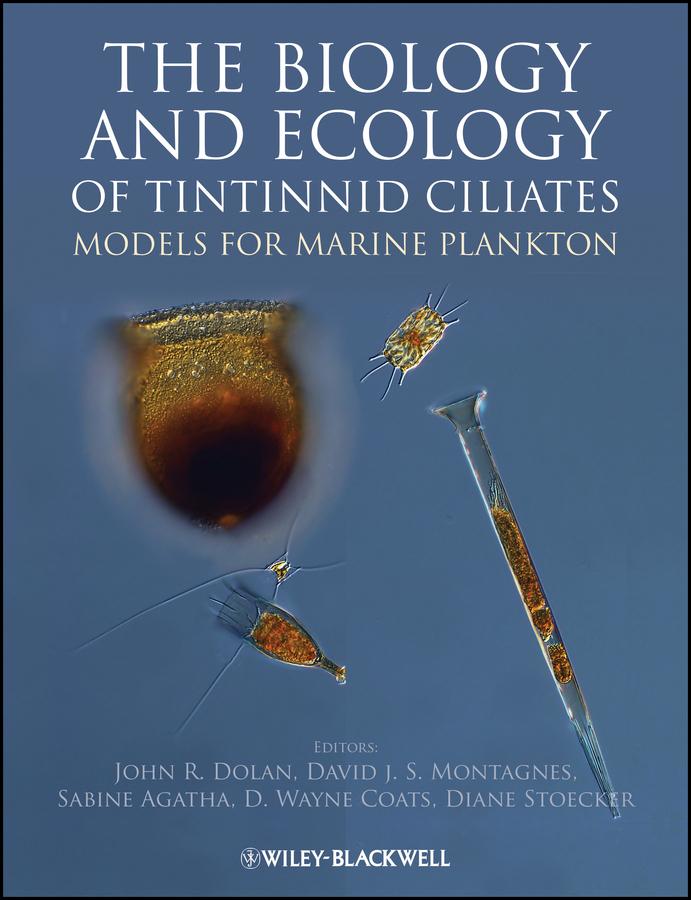
Planktonic protists both produce and consume most of the primary production in the world ocean. They not only play key roles in the oceans but also represent an astounding amount of diversity: ecological morphological and genetic. However, for most taxa their ecology, morphology, phylogeny and biogeography are either poorly known or appear to be largely unrelated to one another; this hinders our understanding of their biology as well as interpretation of emerging genetic data. Tintinnid ciliates represent a singular exception. Compared to nearly all other groups of planktonic protists, there is a very substantial and relatively detailed literature (both modern and historical) on tintinnids. This volume synthesizes knowledge concerning a wide variety of topics ranging from anatomy and systematics, physiology, behavior, ecology (including ecological roles, predators, parasites, biogeography, and cysts) to fossil history. It will appeal to an audience ranging from advanced undergraduates to researchers in the fields of Oceanography, Marine Biology and Microbial Ecology.
Pay easily by card, Klarna, Apple Pay or Google Pay. Not happy? You always have a 14-day money-back guarantee. Read more in our terms. If you have any questions, email us at hello@memmo.org.
Memmo makes studying easier – wherever you are in the world. We bring your course books and smart study tools together in one place: summaries, quizzes, podcasts and flashcards. Plus Ted, your study buddy who answers anything you wonder. Over 50,000 students already study here – built to help you learn faster and stress less.