
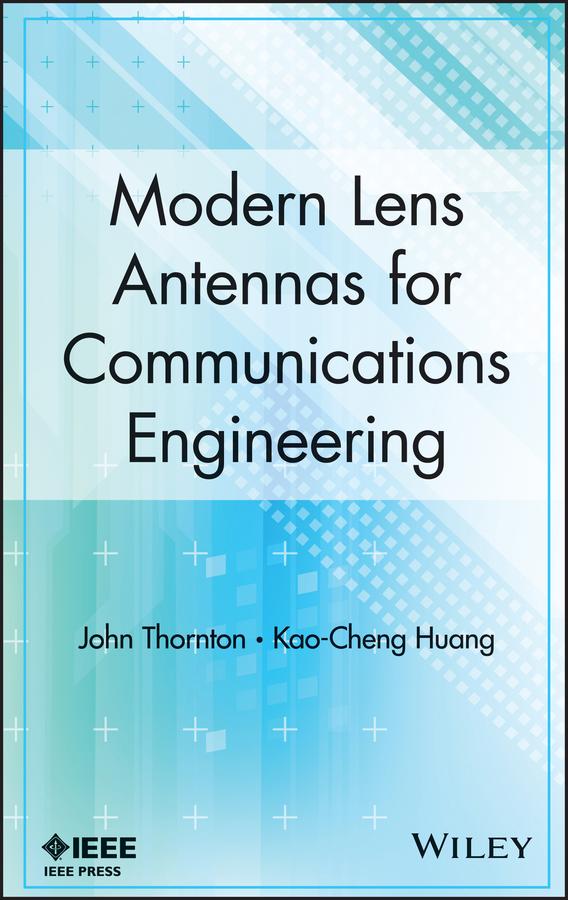
The aim of this book is to present the modern design principles and analysis of lens antennas. It gives graduates and RF/Microwave professionals the design insights in order to make full use of lens antennas. Why do we want to write a book in lens antennas? Because this topic has not been thoroughly publicized, its importance is underestimated. As antennas play a key role in communication systems, recent development in wireless communications would indeed benefit from the characteristics of lens antennas: low profile, and low cost etc.
The major advantages of lens antennas are narrow beamwidth, high gain, low sidelobes and low noise temperature. Their structures can be more compact and weigh less than horn antennas and parabolic antennas. Lens antennas with their quasi-optical characteristics, also have low loss, particularly at near millimeter and submillimeter wavelengths where they have particular advantages.
The major advantages of lens antennas are narrow beamwidth, high gain, low sidelobes and low noise temperature. Their structures can be more compact and weigh less than horn antennas and parabolic antennas. Lens antennas with their quasi-optical characteristics, also have low loss, particularly at near millimeter and submillimeter wavelengths where they have particular advantages.
This book systematically conducts advanced and up-to-date treatment of lens antennas.
Pages: 284
Category: Ingenjörsvetenskap
e-ISBN: 9781118345139
Shipping weight: 1.2 kg
Ships in: 1-2 days
Pay easily by card, Klarna, Apple Pay or Google Pay. Not happy? You always have a 14-day money-back guarantee. Read more in our terms. If you have any questions, email us at hello@memmo.org.
Memmo makes studying easier – wherever you are in the world. We bring your course books and smart study tools together in one place: summaries, quizzes, podcasts and flashcards. Plus Ted, your study buddy who answers anything you wonder. Over 50,000 students already study here – built to help you learn faster and stress less.