
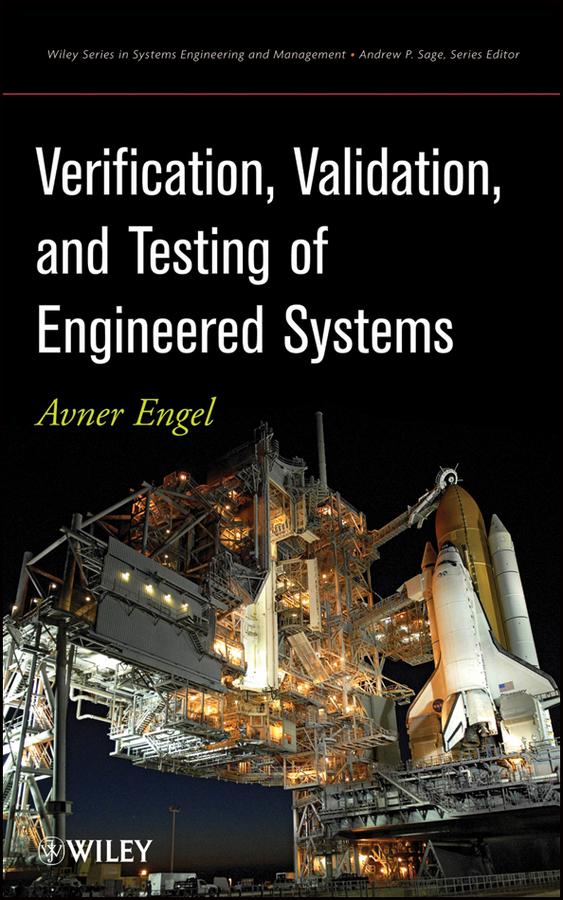
Systems' Verification Validation and Testing (VVT) are carried out throughout systems' lifetimes. Notably, quality-cost expended on performing VVT activities and correcting system defects consumes about half of the overall engineering cost. Verification, Validation and Testing of Engineered Systems provides a comprehensive compendium of VVT activities and corresponding VVT methods for implementation throughout the entire lifecycle of an engineered system. In addition, the book strives to alleviate the fundamental testing conundrum, namely: What should be tested? How should one test? When should one test? And, when should one stop testing? In other words, how should one select a VVT strategy and how it be optimized?
The book is organized in three parts: The first part provides introductory material about systems and VVT concepts. This part presents a comprehensive explanation of the role of VVT in the process of engineered systems (Chapter-1). The second part describes 40 systems' development VVT activities (Chapter-2) and 27 systems' post-development activities (Chapter-3). Corresponding to these activities, this part also describes 17 non-testing systems' VVT methods (Chapter-4) and 33 testing systems' methods (Chapter-5). The third part of the book describes ways to model systems' quality cost, time and risk (Chapter-6), as well as ways to acquire quality data and optimize the VVT strategy in the face of funding, time and other resource limitations as well as different business objectives (Chapter-7). Finally, this part describes the methodology used to validate the quality model along with a case study describing a system's quality improvements (Chapter-8).
Fundamentally, this book is written with two categories of audience in mind. The first category is composed of VVT practitioners, including Systems, Test, Production and Maintenance engineers as well as first and second line managers. The second category is composed of students and faculties of Systems, Electrical, Aerospace, Mechanical and Industrial Engineering schools. This book may be fully covered in two to three graduate level semesters; although parts of the book may be covered in one semester. University instructors will most likely use the book to provide engineering students with knowledge about VVT, as well as to give students an introduction to formal modeling and optimization of VVT strategy.
Pay easily by card, Klarna, Apple Pay or Google Pay. Not happy? You always have a 14-day money-back guarantee. Read more in our terms. If you have any questions, email us at hello@memmo.org.
Memmo makes studying easier – wherever you are in the world. We bring your course books and smart study tools together in one place: summaries, quizzes, podcasts and flashcards. Plus Ted, your study buddy who answers anything you wonder. Over 50,000 students already study here – built to help you learn faster and stress less.