
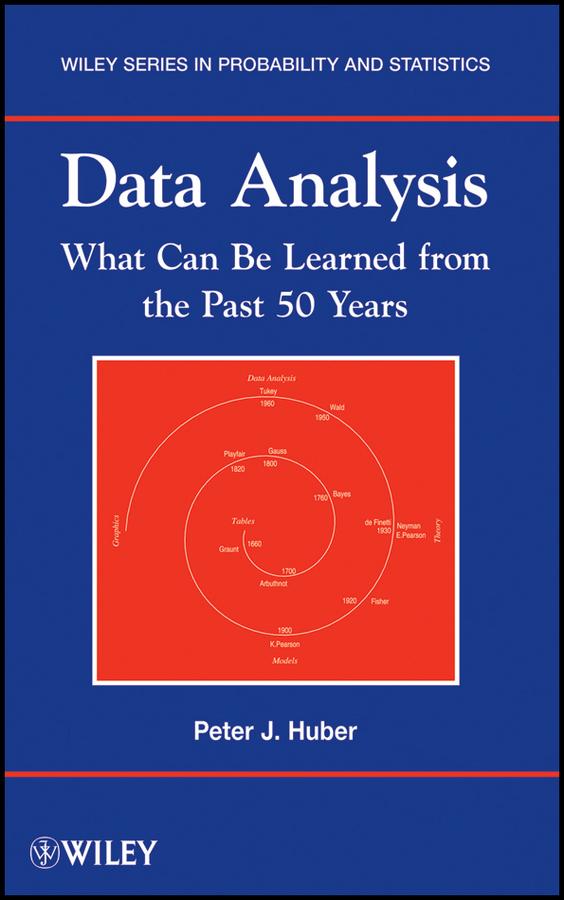
This book explores the many provocative questions concerning the fundamentals of data analysis. It is based on the time-tested experience of one of the gurus of the subject matter. Why should one study data analysis? How should it be taught? What techniques work best, and for whom? How valid are the results? How much data should be tested? Which machine languages should be used, if used at all? Emphasis on apprenticeship (through hands-on case studies) and anecdotes (through real-life applications) are the tools that Peter J. Huber uses in this volume. Concern with specific statistical techniques is not of immediate value; rather, questions of strategy – when to use which technique – are employed. Central to the discussion is an understanding of the significance of massive (or robust) data sets, the implementation of languages, and the use of models. Each is sprinkled with an ample number of examples and case studies. Personal practices, various pitfalls, and existing controversies are presented when applicable. The book serves as an excellent philosophical and historical companion to any present-day text in data analysis, robust statistics, data mining, statistical learning, or computational statistics.
Pages: 234
Category: Vetenskapsteori och forskningsmetod
e-ISBN: 9781118018262
Shipping weight: 1.2 kg
Ships in: 1-2 days
Pay easily by card, Klarna, Apple Pay or Google Pay. Not happy? You always have a 14-day money-back guarantee. Read more in our terms. If you have any questions, email us at hello@memmo.org.
Memmo makes studying easier – wherever you are in the world. We bring your course books and smart study tools together in one place: summaries, quizzes, podcasts and flashcards. Plus Ted, your study buddy who answers anything you wonder. Over 50,000 students already study here – built to help you learn faster and stress less.