
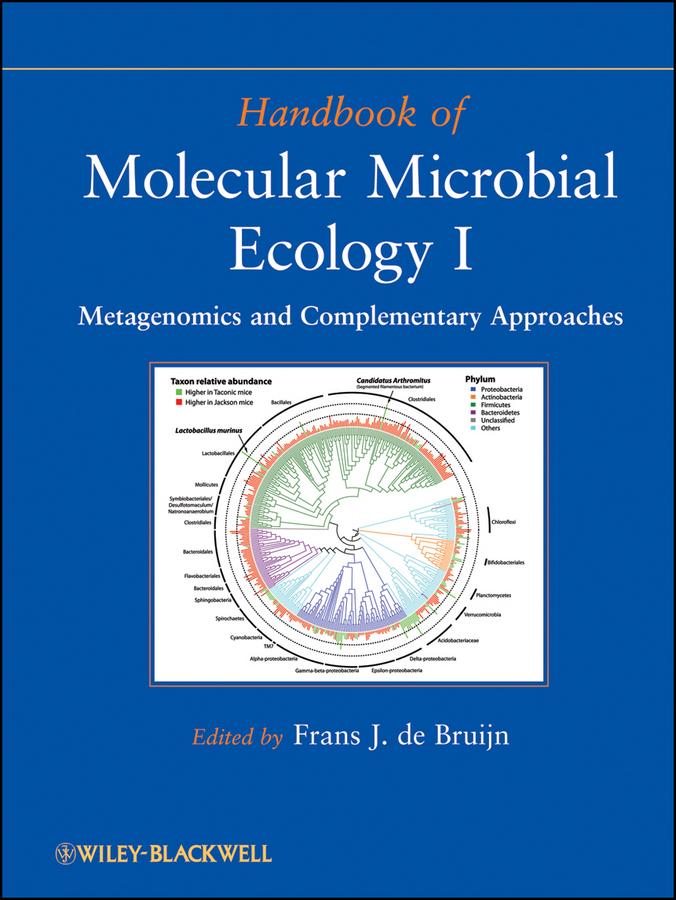
The premiere two-volume reference on revelations from studying complex microbial communities in many distinct habitats
Metagenomics is an emerging field that has changed the way microbiologists study microorganisms. It involves the genomic analysis of microorganisms by extraction and cloning of DNA from a group of microorganisms, or the direct use of the purified DNA or RNA for sequencing, which allows scientists to bypass the usual protocol of isolating and culturing individual microbial species. This method is now used in laboratories across the globe to study microorganism diversity and for isolating novel medical and industrial compounds.
Handbook of Molecular Microbial Ecology is the first comprehensive two-volume reference to cover unculturable microorganisms in a large variety of habitats, which could not previously have been analyzed without metagenomic methodology. It features review articles as well as a large number of case studies, based largely on original publications and written by international experts. This first volume, Metagenomics and Complementary Approaches, covers such topics as:
-
Background information on DNA reassociation and use of 16 rRNA and other DNA fingerprinting approaches
-
Species designation in microbiology
-
Metagenomics: Introduction to the basic tools with examples
-
Consortia and databases
-
Bioinformatics
-
Computer-assisted analysis
-
Complementary approaches—microarrays, metatranscriptomics, metaproteomics, metabolomics, and single cell analysis
A special feature of this volume is the highlighting of the databases and computer programs used in each study; they are listed along with their sites in order to facilitate the computer-assisted analysis of the vast amount of data generated by metagenomic studies.
Handbook of Molecular Microbial Ecology I is an invaluable reference for researchers in metagenomics, microbiology, and environmental microbiology; those working on the Human Microbiome Project; microbial geneticists; molecular microbial ecologists; and professionals in molecular microbiology and bioinformatics.
Pay easily by card, Klarna, Apple Pay or Google Pay. Not happy? You always have a 14-day money-back guarantee. Read more in our terms. If you have any questions, email us at hello@memmo.org.
Memmo makes studying easier – wherever you are in the world. We bring your course books and smart study tools together in one place: summaries, quizzes, podcasts and flashcards. Plus Ted, your study buddy who answers anything you wonder. Over 50,000 students already study here – built to help you learn faster and stress less.