
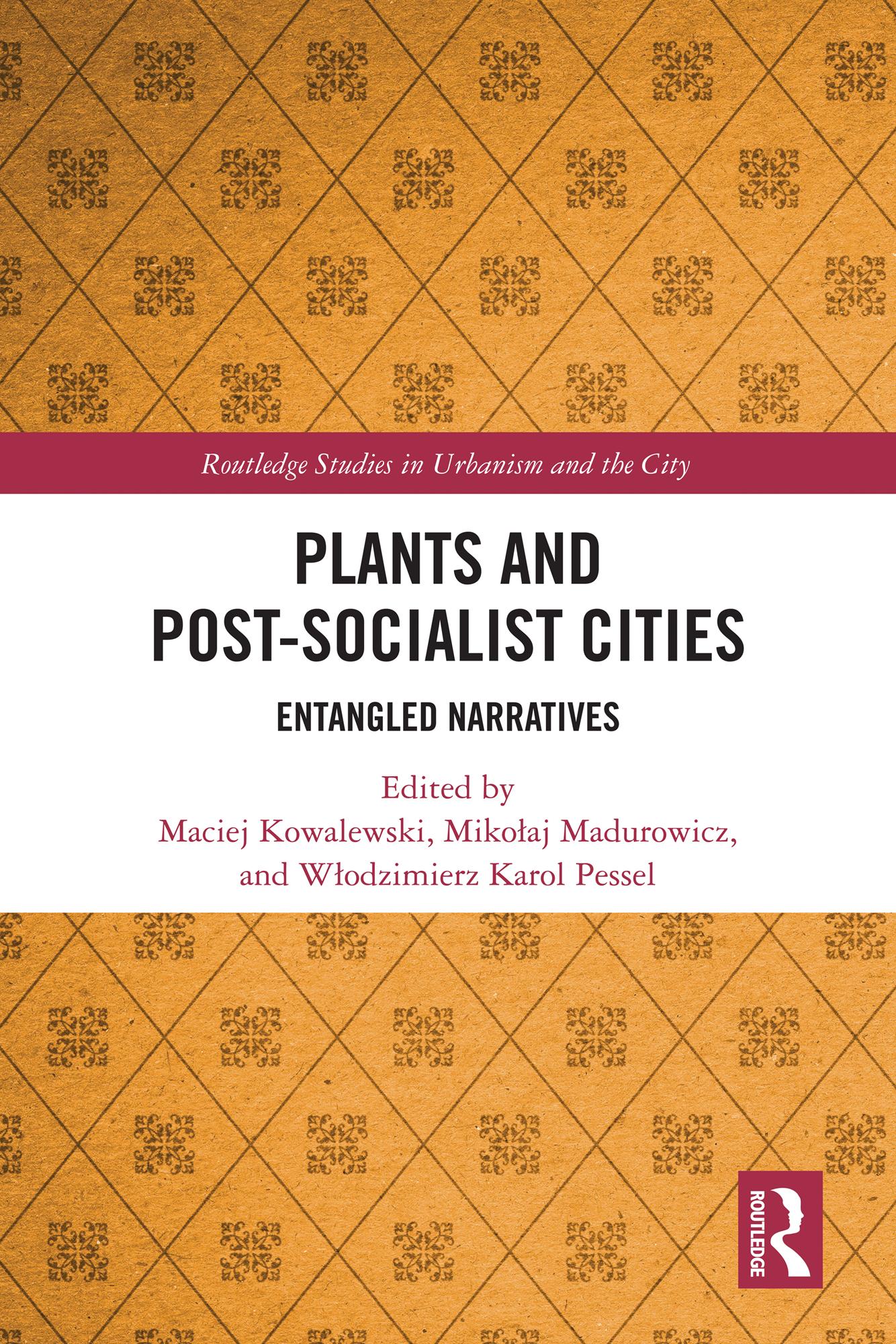
This book offers a theoretically informed exploration of the political, cultural, and ecological significance of urban greenery in post-socialist cities. It traces how plants mediate among memory, infrastructure, and regimes of power across diverse historical and geographical contexts.
The book develops a vocabulary for understanding plants as actors, symbols, archives, and processes within urban transformation. It does so through case studies ranging from Polish housing estates, Nowa Huta, the Upper Silesian brownfields, Elbląg, Szczecin, Warsaw, Vilnius, and Belgrade to Indian urban imaginaries and Chornobyl’s gardens. Drawing on environmental humanities, urban studies, critical plant studies, political ecology, plant blindness, post-political theory, and more-than-human approaches, the book shows how vegetal life participates in memory, governance, conflict, decay, and everyday urban experience.
This book will appeal to scholars and advanced students in urban studies, cultural studies, environmental humanities, anthropology, and human geography, as well as to readers interested in post-socialist transformations, urban ecology, and more-than-human approaches to the city.
Pay easily by card, Klarna, Apple Pay or Google Pay. Not happy? You always have a 14-day money-back guarantee. Read more in our terms. If you have any questions, email us at hello@memmo.org.
Memmo makes studying easier – wherever you are in the world. We bring your course books and smart study tools together in one place: summaries, quizzes, podcasts and flashcards. Plus Ted, your study buddy who answers anything you wonder. Over 75,000 students already study here – built to help you learn faster and stress less.