
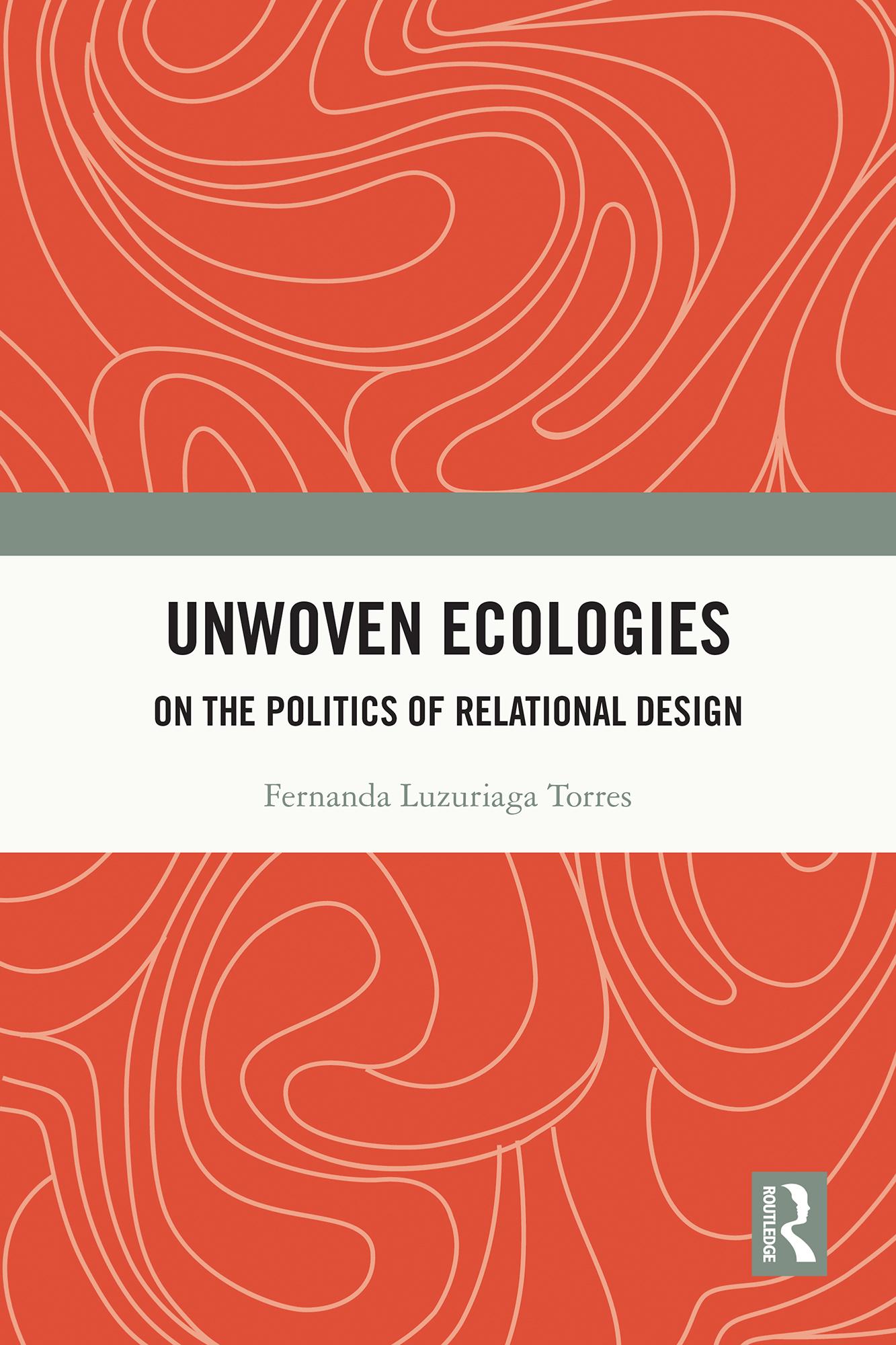
This book addresses the urgency of rethinking coexistence through urbanism. In the face of contemporary global crises, it argues that modern thought and its dichotomies
are insufficient to grasp current territorial conflicts. Instead, it proposes viewing coexistence as a field of friction among beings, knowledges, and economies
intertwined within a relational ecology, suggesting that these connections serve as the very point of departure for urbanism.
Grounded in research from the Ecuadorian Amazon, the work situates local conflicts within global dynamics of the coloniality of power. Methodologically,
it pairs socio-spatial analysis with the microhistories of Kichwa women, bringing to light living spatial configurations. Informed by cannibal thought and the bodyterritory
continuum, these practices reframe urbanism as cosmic diplomacy and predation, while the ch’ixi framework offers a way to conceive coexistence without
assimilation.
Unwoven Ecologies: On the Politics of Relational Design is intended for scholars, postgraduate students, urban planners, and activists in political ecology and decolonial
theory who are seeking relational methodologies to foster resilient models of dwelling on Earth.
Pay easily by card, Klarna, Apple Pay or Google Pay. Not happy? You always have a 14-day money-back guarantee. Read more in our terms. If you have any questions, email us at hello@memmo.org.
Memmo makes studying easier – wherever you are in the world. We bring your course books and smart study tools together in one place: summaries, quizzes, podcasts and flashcards. Plus Ted, your study buddy who answers anything you wonder. Over 75,000 students already study here – built to help you learn faster and stress less.