
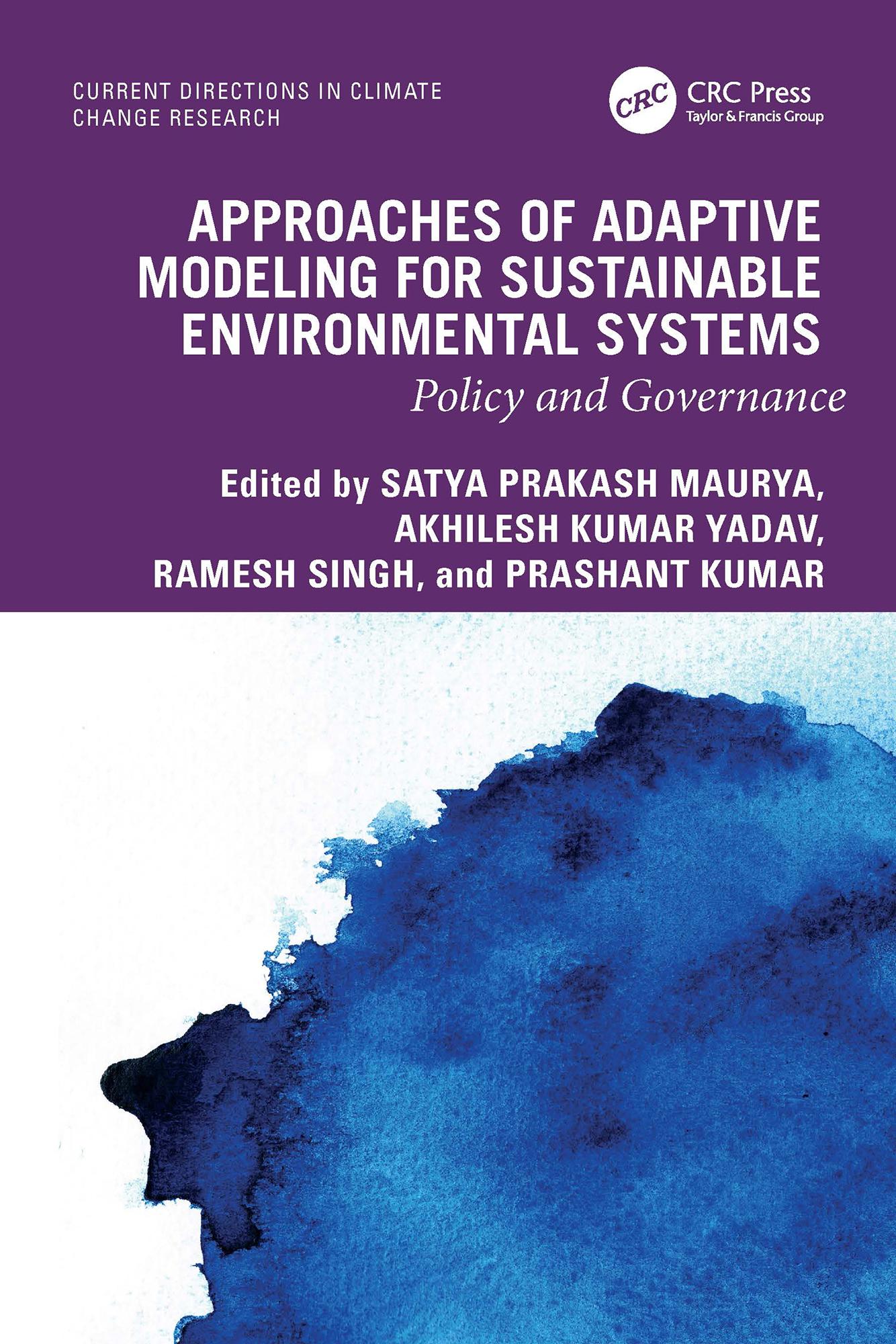
This book provides a comprehensive overview of adaptive modeling techniques and explores various modeling approaches, including system dynamics, agent-based modeling, and integrated assessment modeling, with a focus on key environmental challenges.
It examines how adaptive modeling can inform evidence-based policymaking, foster stakeholder engagement, support adaptive governance structures, and facilitate the implementation of sustainable practices. The book presents real-world case studies and examples from diverse environmental contexts to illustrate the practical application of adaptive modeling approaches.
Key Features:
- Provides an overview of adaptive modeling approaches for sustainable development
- Emphasizes policy and governance integration for adaptive modeling to achieve sustainable outcomes
- Proposes the development of sustainable and resilient environmental systems
- Explains how adaptive modeling informs policy, fosters participation, and supports adaptive governance structures
- Includes both theoretical and practical case studies
This book is aimed at graduate students and researchers in environmental and civil engineering.
Pay easily by card, Klarna, Apple Pay or Google Pay. Not happy? You always have a 14-day money-back guarantee. Read more in our terms. If you have any questions, email us at hello@memmo.org.
Memmo makes studying easier – wherever you are in the world. We bring your course books and smart study tools together in one place: summaries, quizzes, podcasts and flashcards. Plus Ted, your study buddy who answers anything you wonder. Over 50,000 students already study here – built to help you learn faster and stress less.