
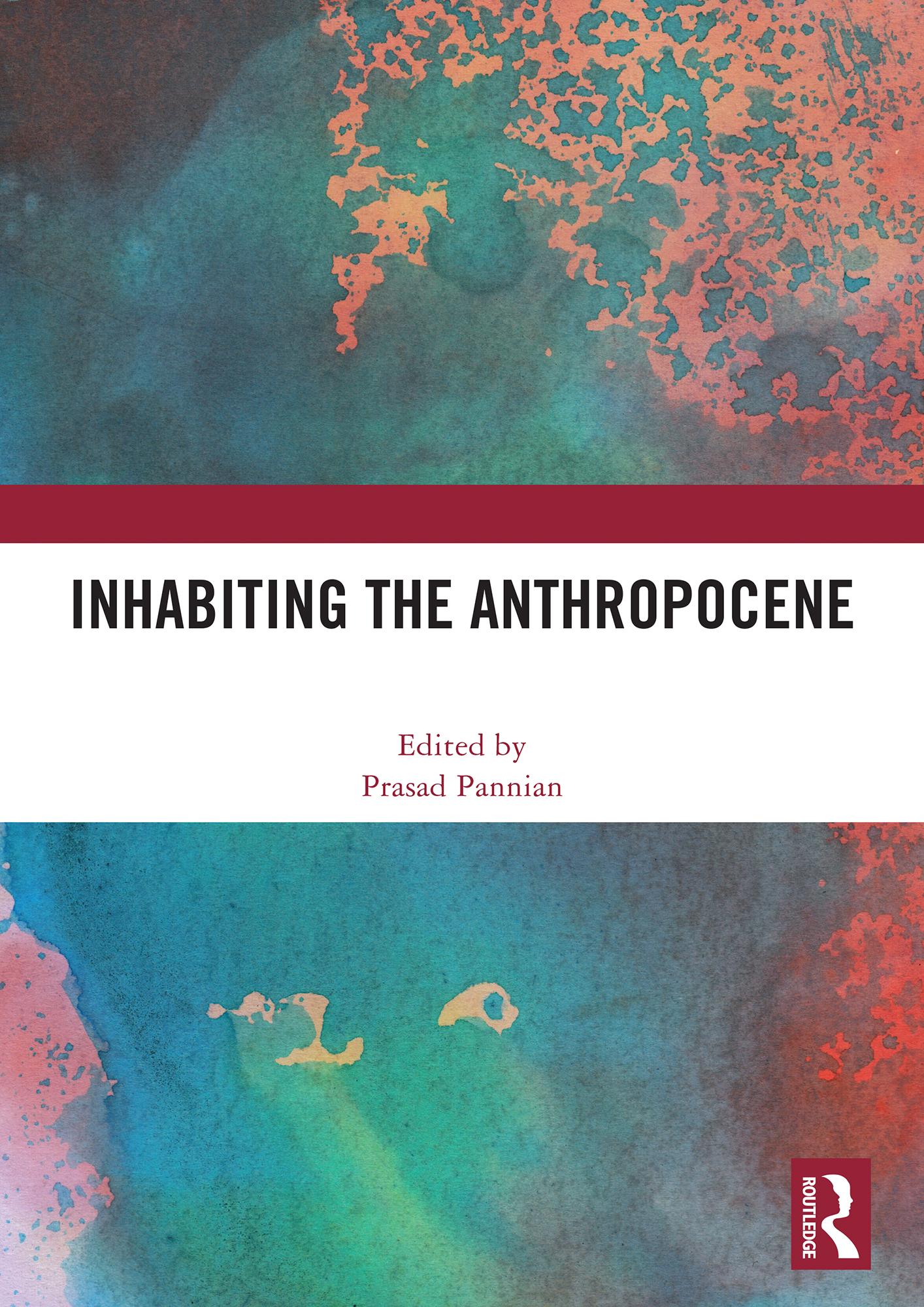
What does it mean to inhabit a world in which human activity has become a geological force? As climate change, ecological crisis, and environmental uncertainty increasingly reshape life on Earth, the humanities are compelled to rethink some of their most enduring
assumptions about history, nature, agency, and the human itself.
Bringing together scholars from diverse disciplines, Inhabiting the Anthropocene explores how the Anthropocene unsettles familiar distinctions between human and natural history, culture, and environment, and the human and the nonhuman. Moving across philosophy, literary studies, environmental humanities, historiography, media studies, ecology, and cultural theory, the essays in this volume engage questions of climate, technology, species life, ecological consciousness, and planetary transformation.
Addressing themes such as posthumanism, phenomenology, climate fiction, ontology, nonhuman worlds, and South Asian histories and ecologies, the collection reflects on the intellectual and ethical challenges of living in an age of accelerating environmental change. The volume will interest scholars, students, and readers concerned with ecology, climate, and the future of life on a rapidly changing planet.
Pay easily by card, Klarna, Apple Pay or Google Pay. Not happy? You always have a 14-day money-back guarantee. Read more in our terms. If you have any questions, email us at hello@memmo.org.
Memmo makes studying easier – wherever you are in the world. We bring your course books and smart study tools together in one place: summaries, quizzes, podcasts and flashcards. Plus Ted, your study buddy who answers anything you wonder. Over 50,000 students already study here – built to help you learn faster and stress less.